
Marine Uniform Recipients
-
![]()
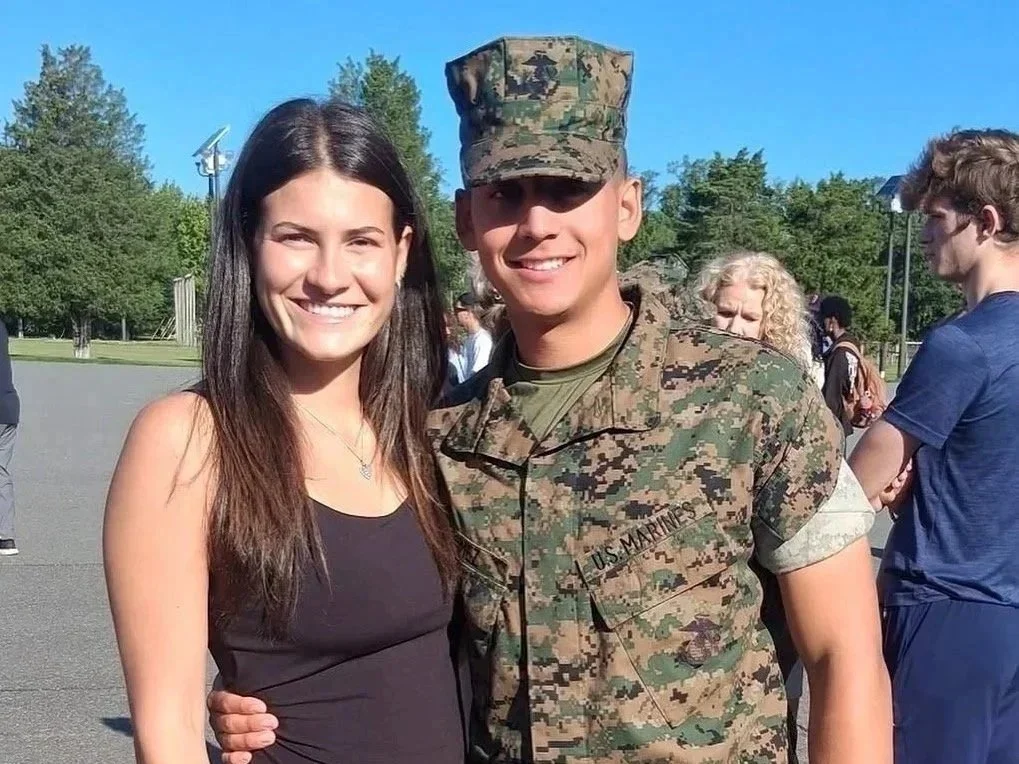
Dominic Gomez
Hometown: Frederick, Maryland
Embry-Riddle Aeronautical University
Major: Aerospace Engineering
-
![]()
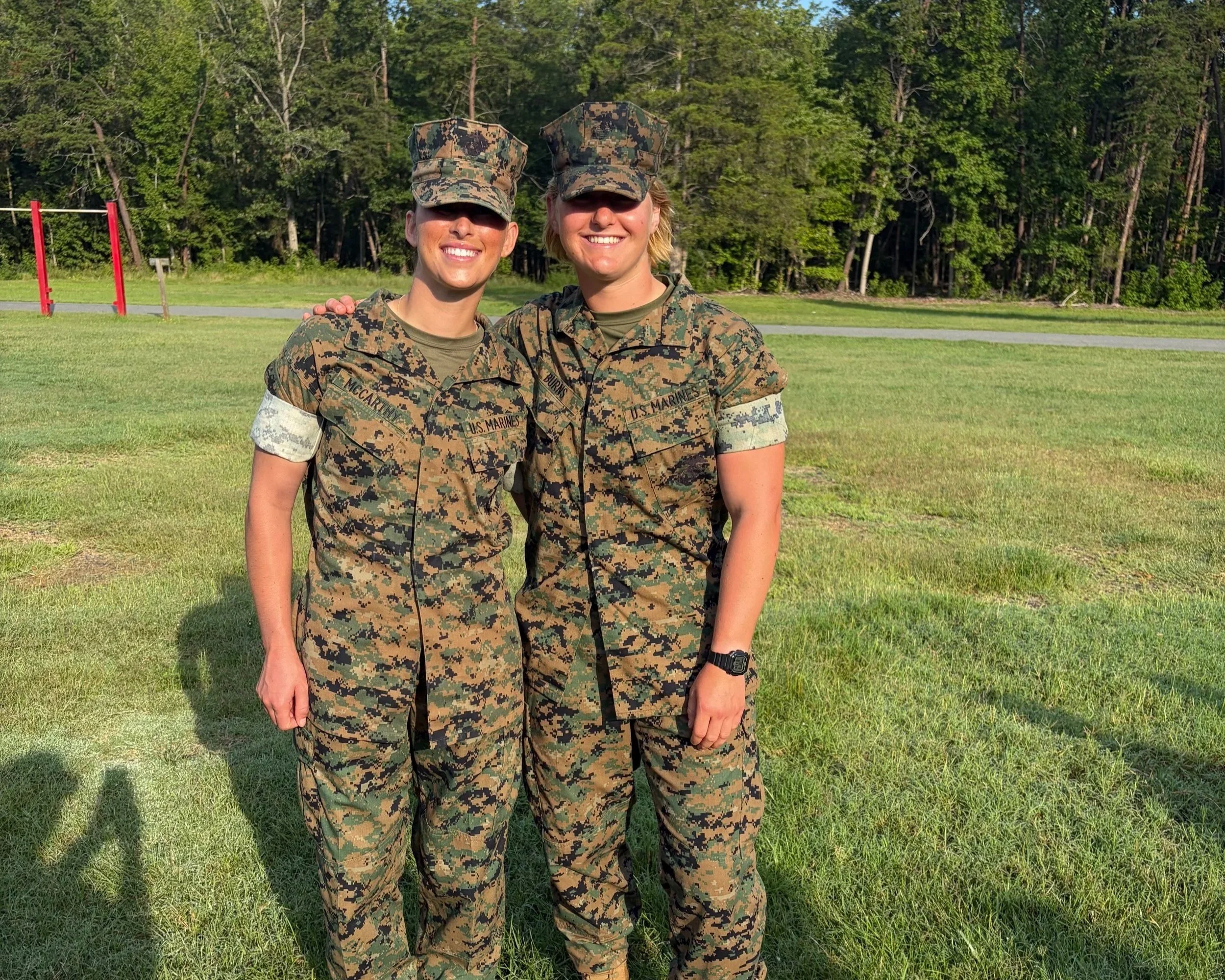
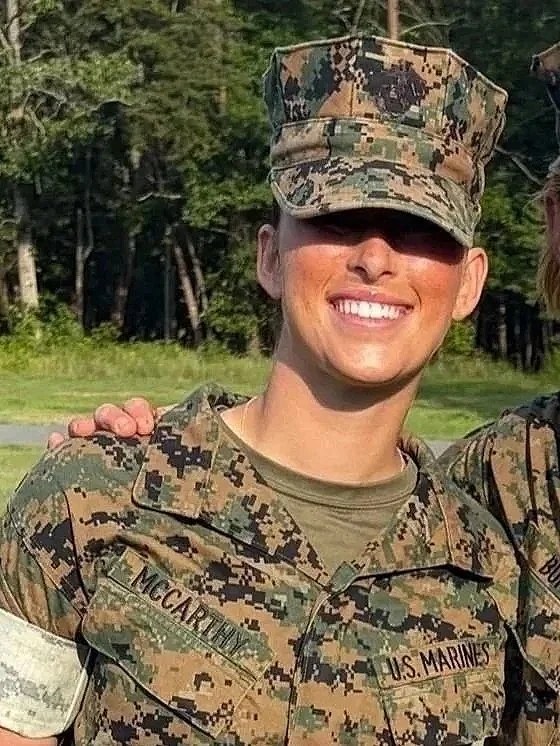
Shannon McCarthy
Hometown: Newton, MA
University of Colorado Boulder
Major: Political Science
-
![]()
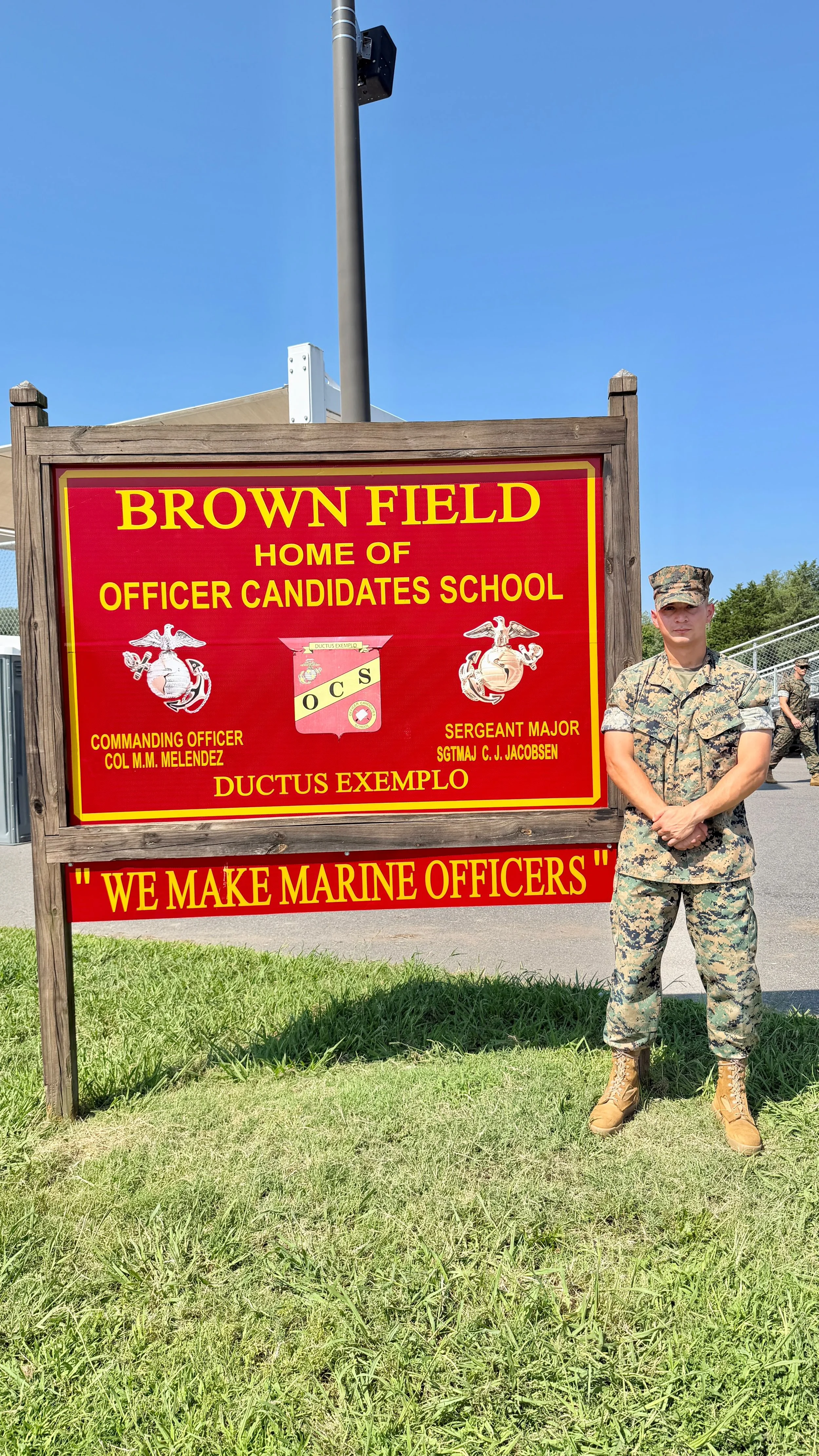
David Villatoro Castro
Hometown: Rahway, NJ
Rice University
Major: Business
-
![]()
Julia Barber
Hometown: Burlington, MA
University of Rochester
Major: Optical Engineering
-
![]()
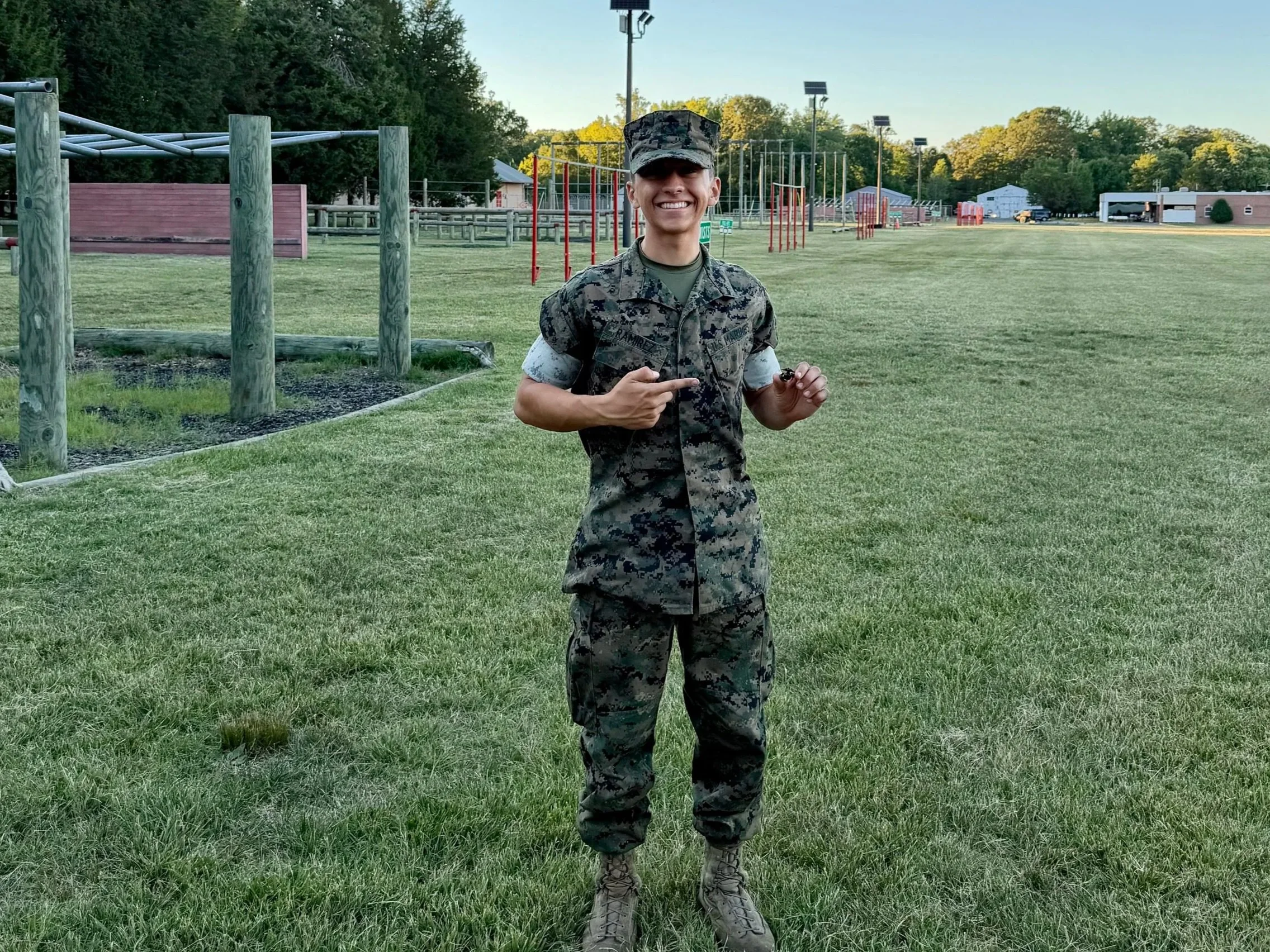
Joshua Ramirez
Hometown: Miami, FL
Jacksonville University
Major: Mechanical Engineering
-
![]()
Michaela Menka
Hometown: Sugar Land, Texas
Texas Southern University
Major: Administration of Justice
-
![]()
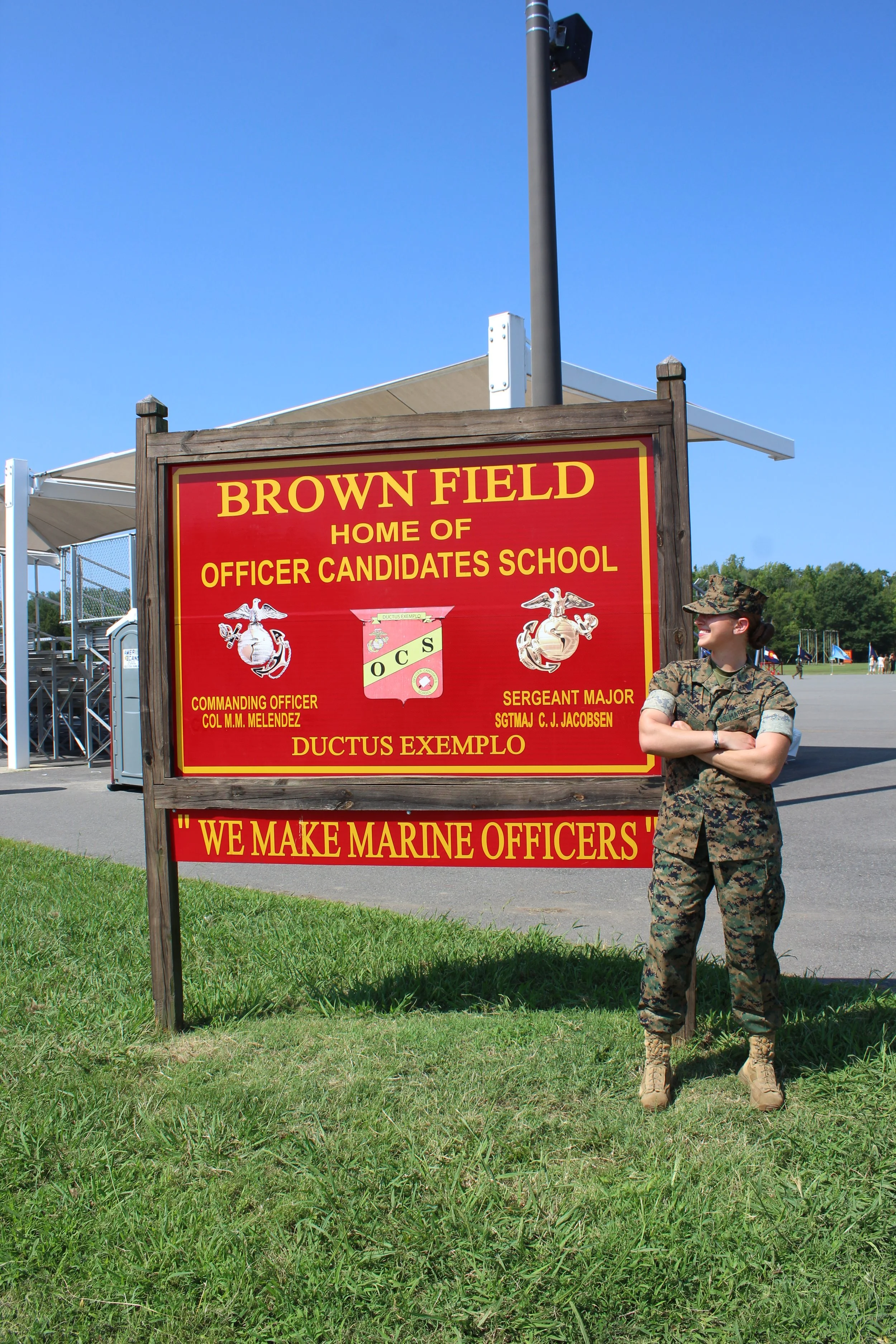
Savannah Peteet
Hometown: Marshall, TX
Embry-Riddle Aeronautical University
Major: Computational Mathematics
-
![]()
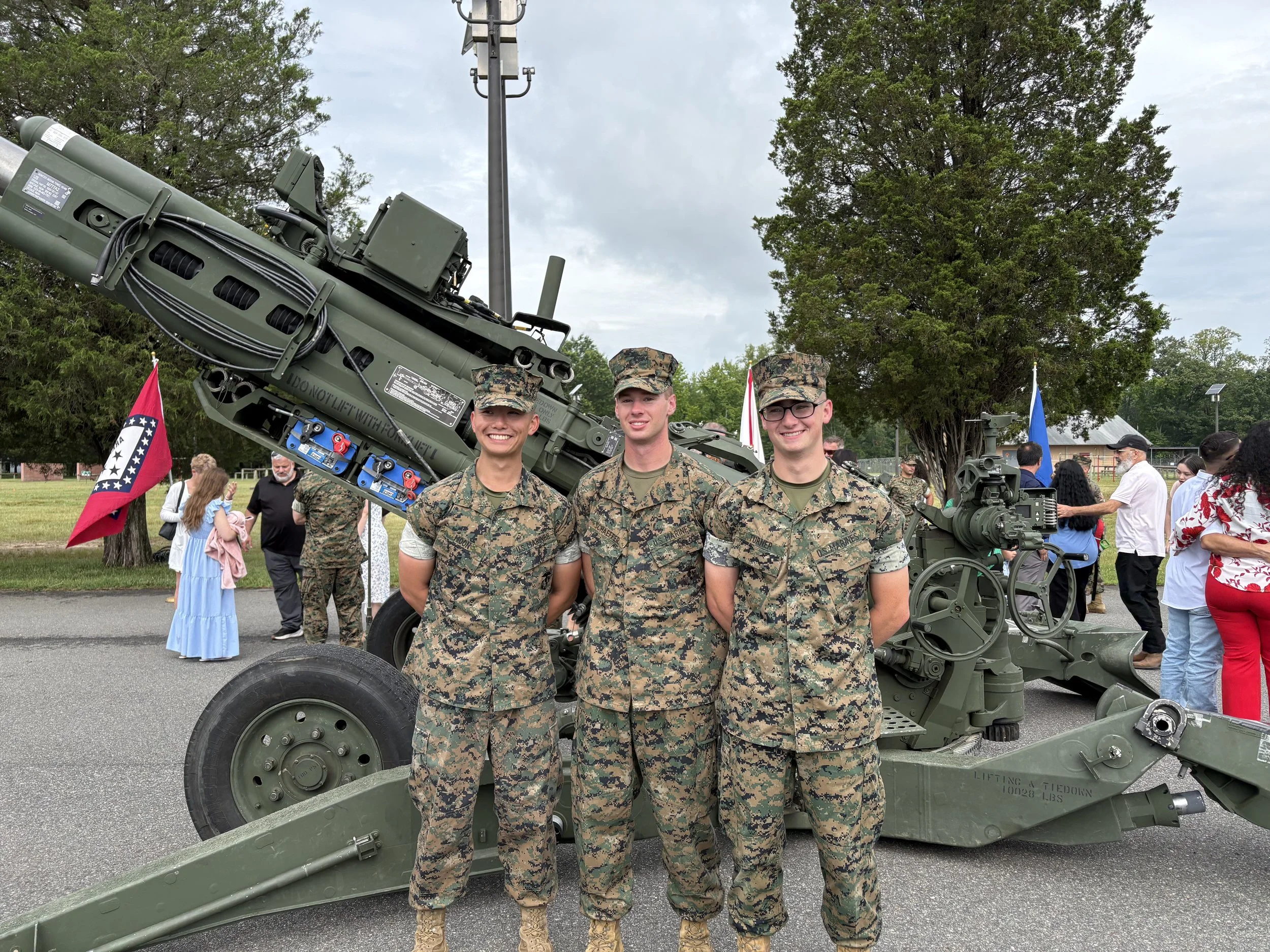
David Schaeffer
Hometown: Dayton, TN
Embry-Riddle Aeronautical University
Major: Aeronautics
-
![]()
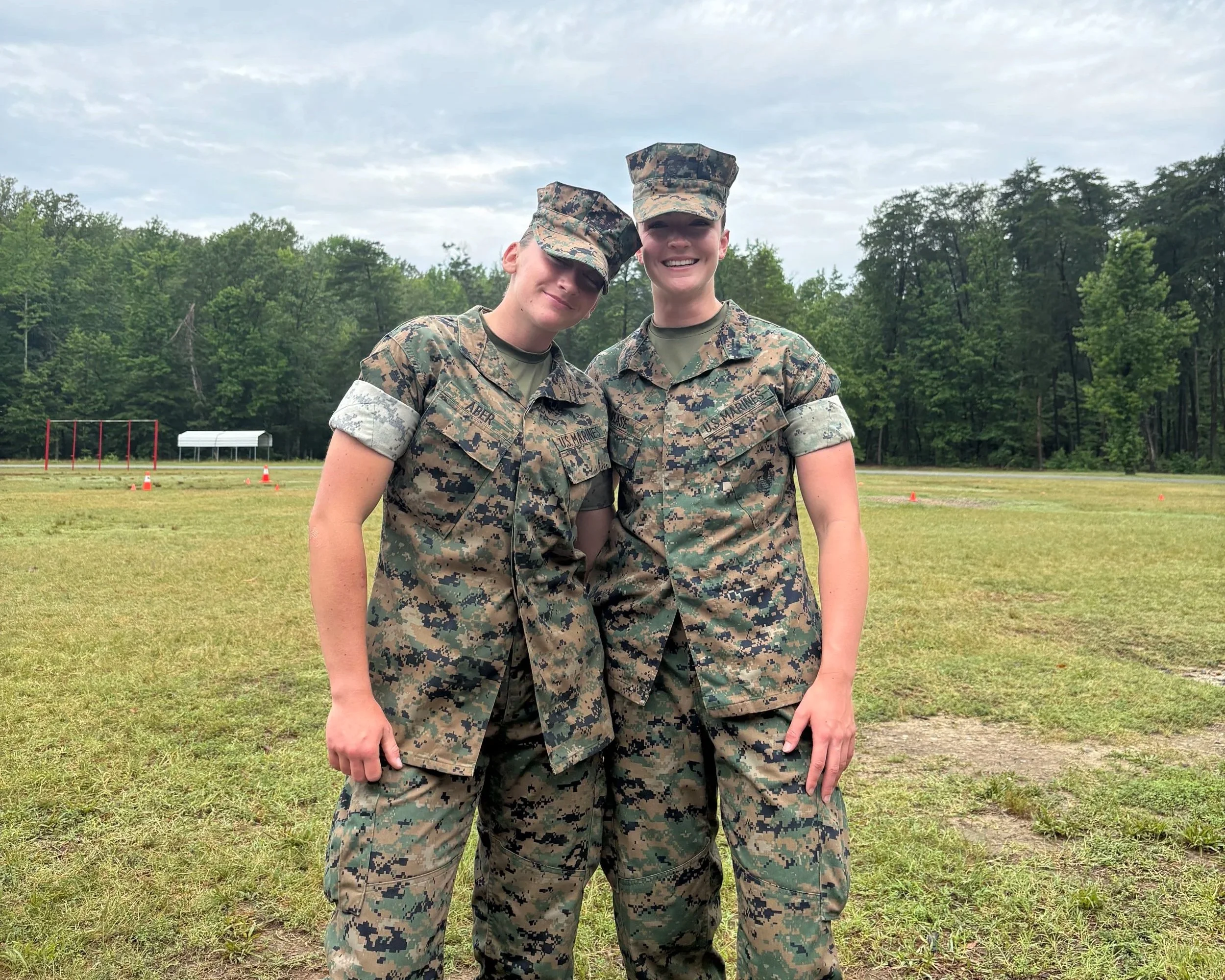
Emma Aber
Hometown: Jacksonville, FL
Jacksonville University
Major: History
-
![]()
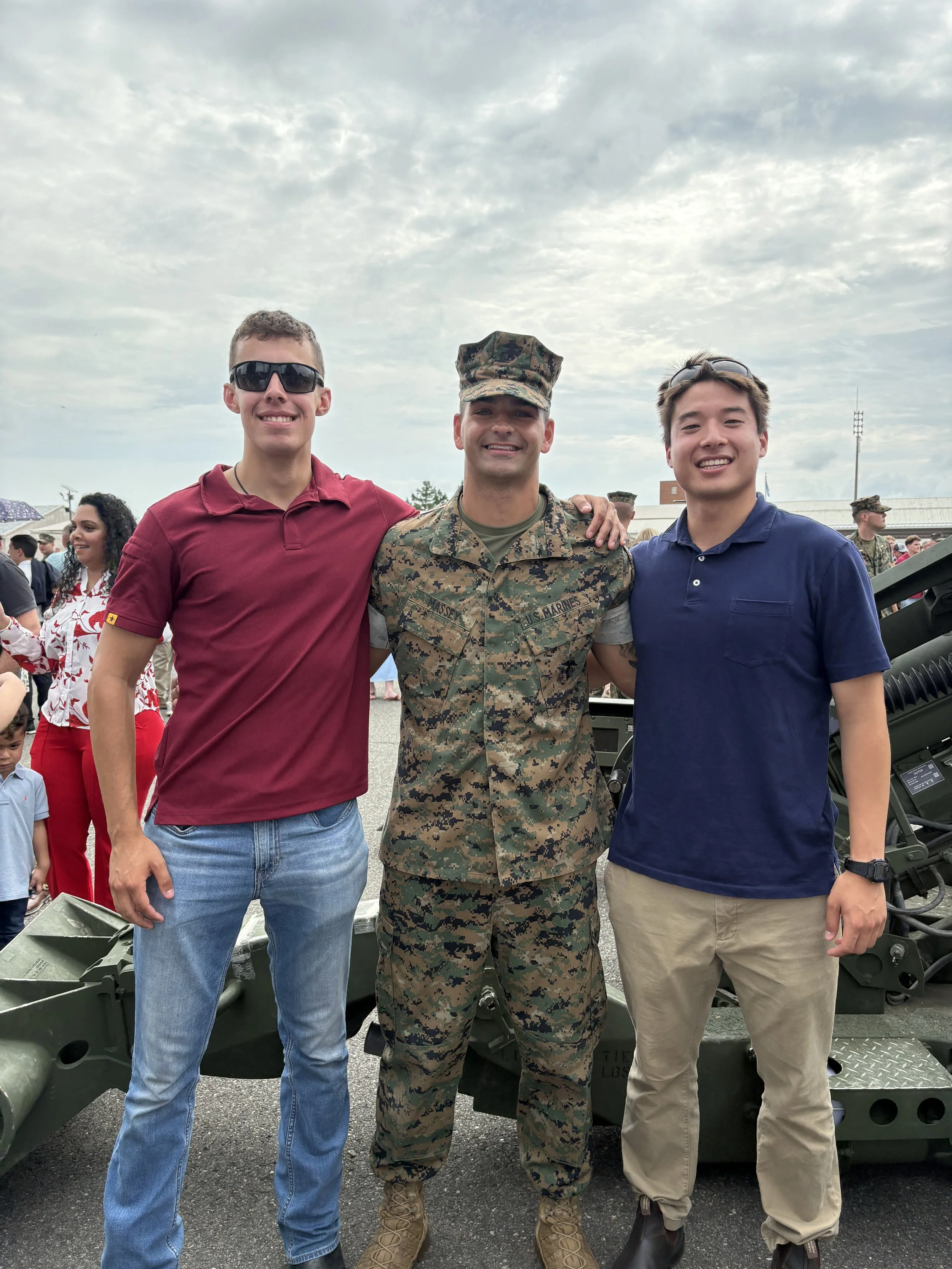
Jesse Massey
Hometown: Houston, TX
Embry-Riddle Aeronautical University
Major: Homeland Security & Intelligence
-
![]()
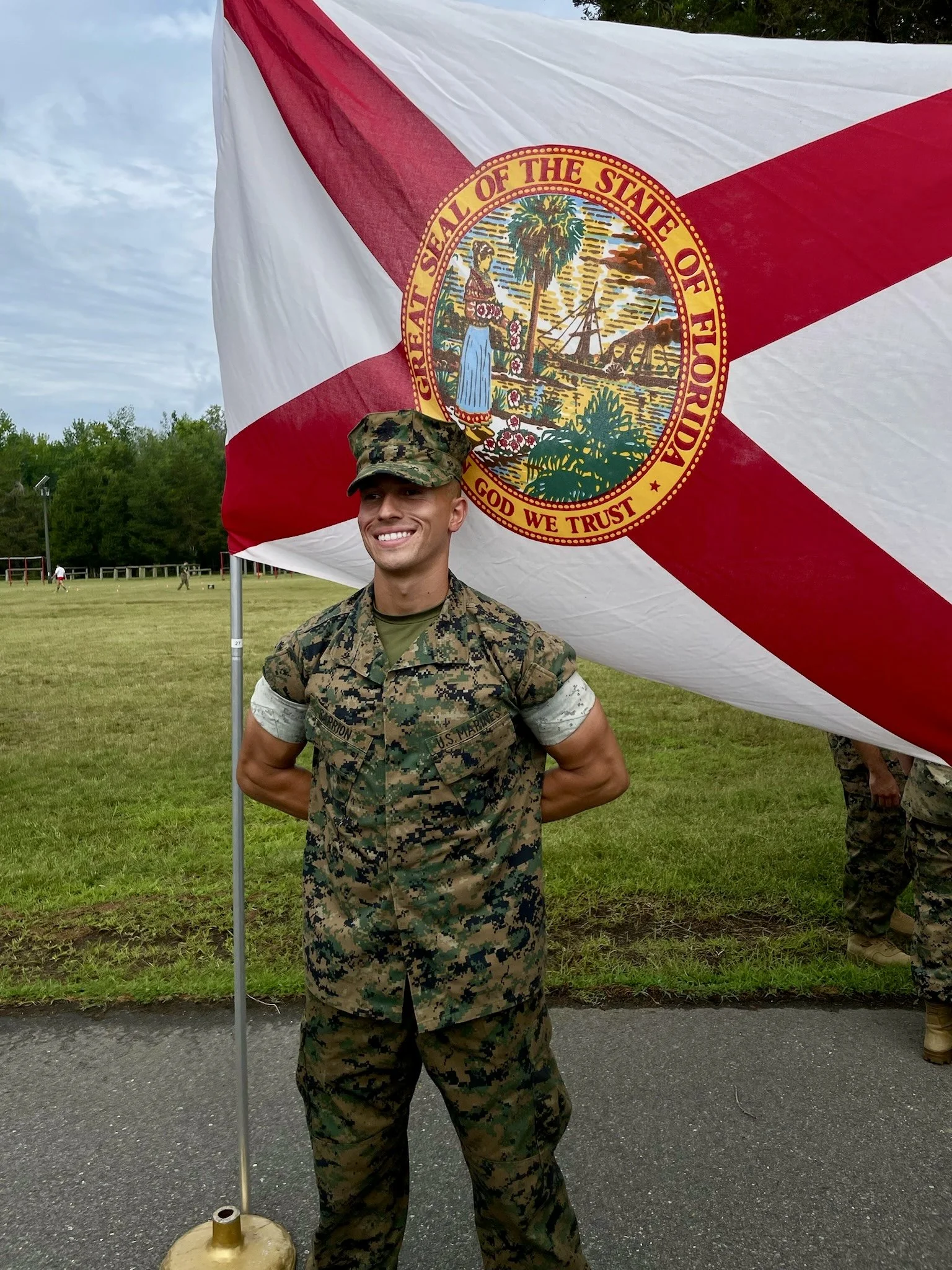
Ashton Sarrion
Hometown: Miramar, FL
Jacksonville University
Major: Exercise Science
-
![]()
Lennon Spakousky
Hometown: Daytona Beach, FL
Embry-Riddle Aeronautical University
Major: Mechanical Engineering
-
![]()
Steven Roney
Hometown: Chesapeake, VA
Virginia Tech
Major: Building Construction
-
![]()
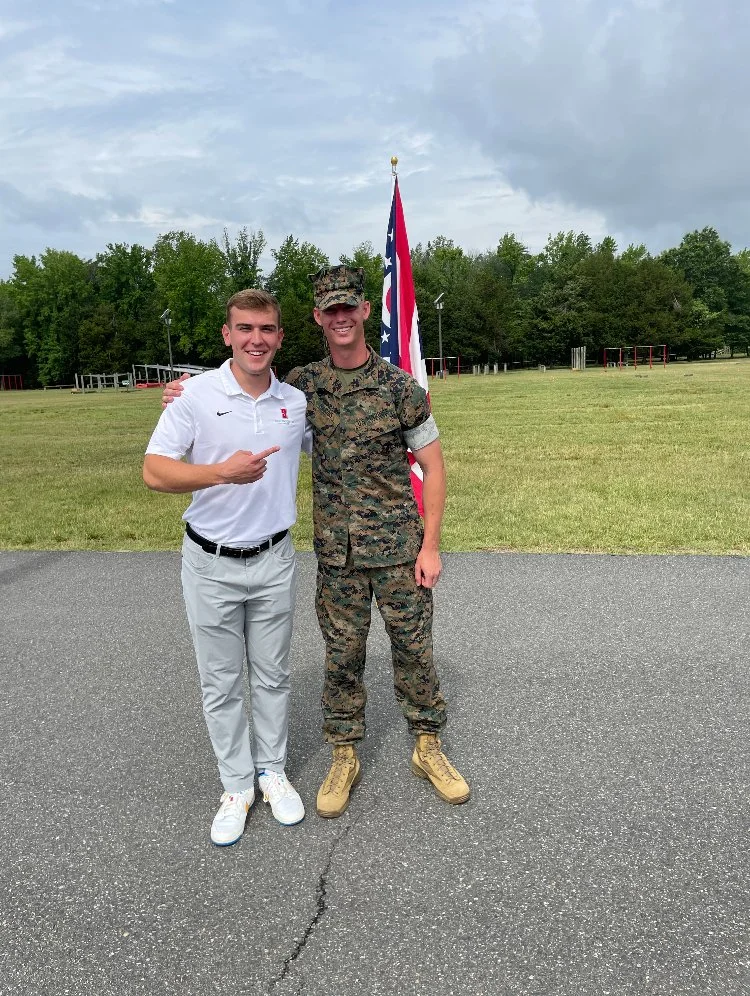
Nicholas Harris
Hometown: Morrow, Ohio
Ohio State University
Major: Criminal Justice
-
![]()
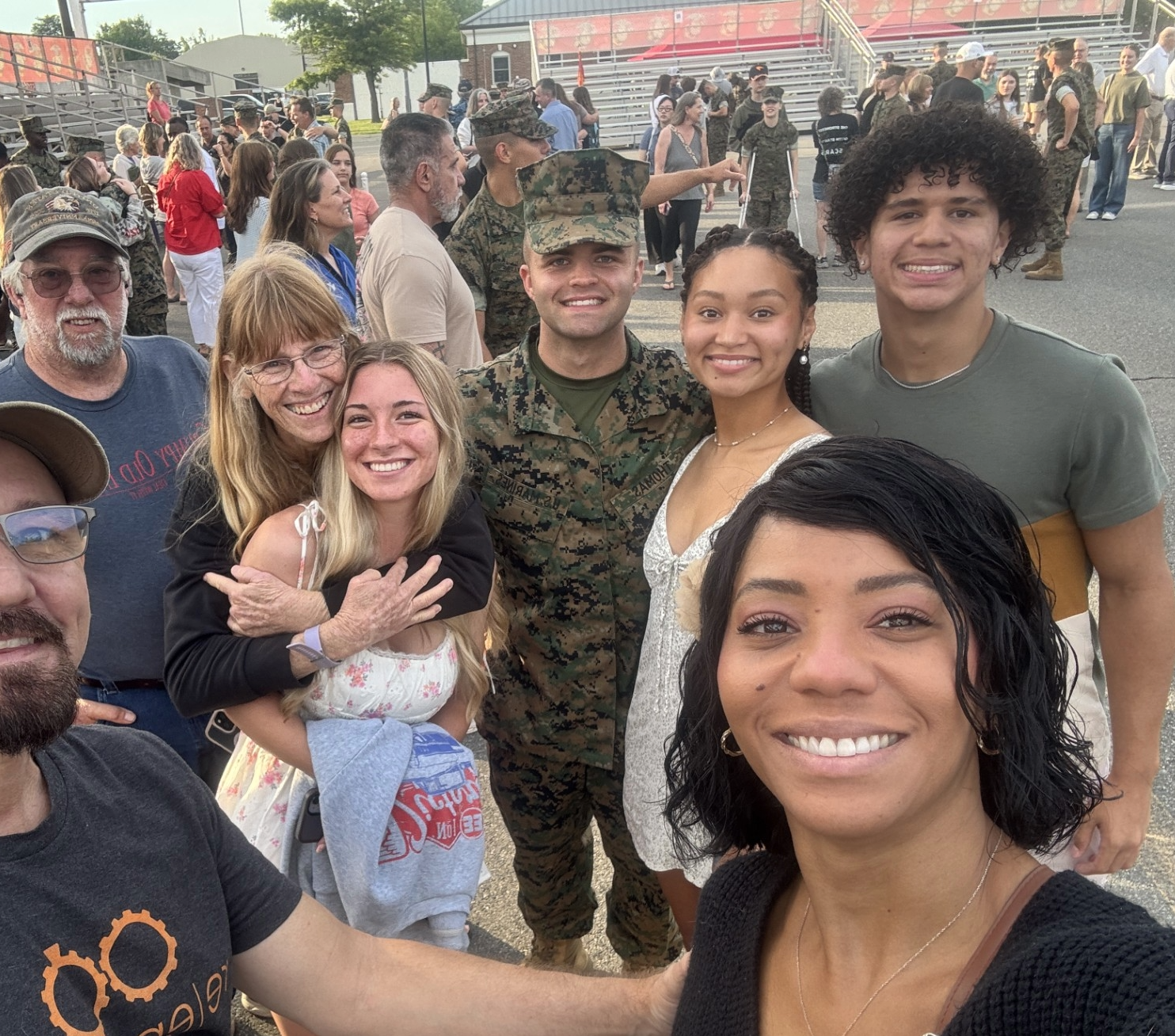
Jacob Thomas
Hometown: Port Orange, Florida
Embry-Riddle Aeronautical University
Major: Aeronautics
-
![]()
Sarah Overly
Hometown: Newark, OH
Miami University
Major: Kinesiology
-
![]()
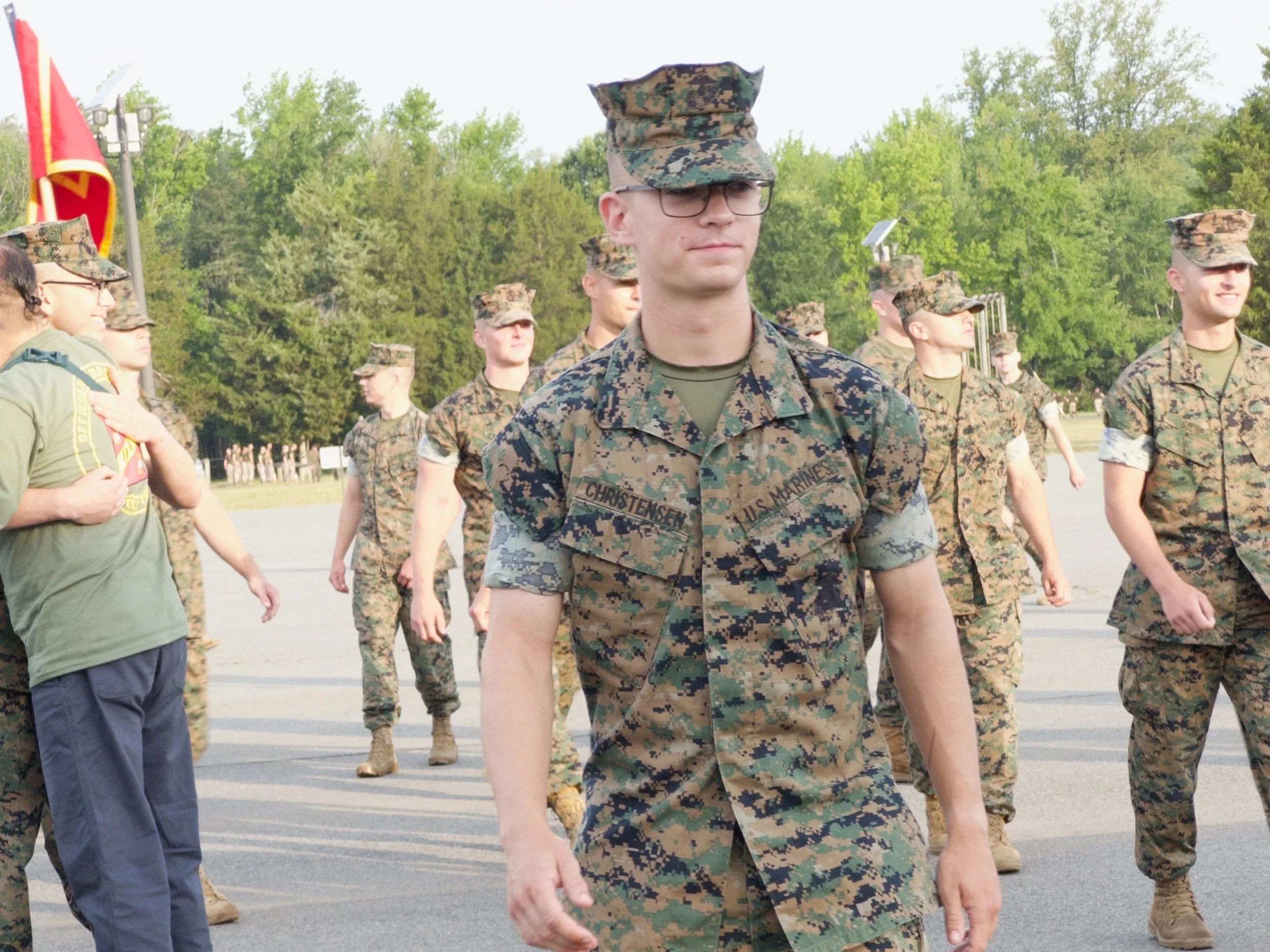
Luke Christensen
Hometown: Olympia, WA
Rice University
Major: Economics, Sports Medicine & Exercise Physiology
-
![]()
Mackenzie Downs
Hometown: Burlington, MA
University of Rochester
Major: Optical Engineering
“Do What You Say, Say What You Mean” - Will Schuessler
Shannon McCarthy: Newton, MA
Highest PFT: 300
Transparency in all actions is valuable. To be a good leader, you must lead by example and be willing to do what you ask of others. This starts with transparency. Transparency of information and transparency in actions.

The reason transparency is so valuable in leadership is that it is the foundation of trust. Leaders who have the trust of those they are leading have the ability to be more productive than those who don't. When trust is shared both ways in any relationship, it allows for autonomy of action, which is important in the Marine Corps. When a leader is able to trust that their people can get a job done correctly and efficiently without oversight, it allows the leader to go take care of other things. Increasing the productivity of the unit. Likewise, when those being led are able to trust that their leader has their best interests in mind and has a reason behind what they are asking, they are more likely to be more bought into the mission. This trust starts with doing what you say and saying what you mean.

“Do What You Say, Say What You Mean” is leading with transparency and building trust within a unit. Personally, I apply this quote in my leadership by following through on commitments, being honest with expectations, and holding myself and others to the same standards. This does and will continue to allow me to build credibility and trust as a leader. While currently a member of NROTC, most of the leadership we have is peer leadership and among friends. This can make leadership hard in some ways, but in the sense of building that trust, it can be easier. Leading among friends and people who you have already established trust and relationships with tends to mean people are more willing to listen and take initiative because they already understand the expectations. Once in the fleet, I think the expectation of doing what you say and saying what you mean will become even more important when we are no longer just leading our peers. There is no built-in trust. That relationship will have to be built on creating that credibility.

I hope to continue to learn and grow as more leadership opportunities present themselves and to always do what I say and say what I mean.
Leadership Positions: fire team leader, squad leader, public affairs officer, assistant drill team captain, new student orientation instructor
“Do What You Say, Say What You Mean” - Will Schuessler
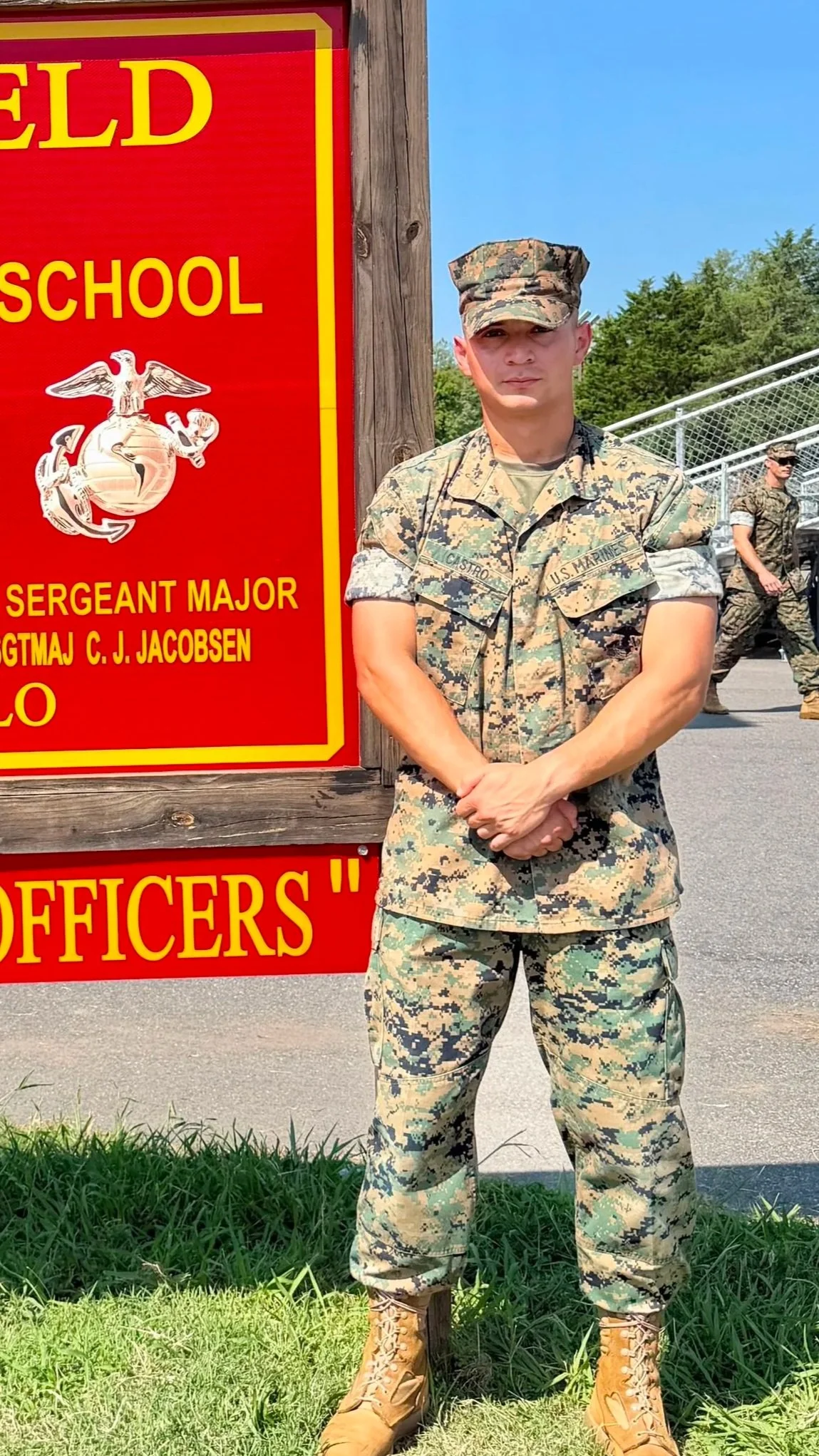
David Villatoro Castro: Rahway, NJ
Highest PFT: 285
Leadership Positions: Squad Leader, Platoon Sergeant, Physical Training Officer, Company Executive Officer
“Do What You Say, Say What You Mean” is a simple phrase, but for someone preparing to commission as an Officer in the United States Marine Corps, it carries significant weight. To me, it represents integrity, accountability, and the responsibility that comes with leadership. As a future Marine officer, my words and actions will directly affect the Marines I lead. Because of that, I must be someone whose words can be trusted and whose actions consistently match what I expect from others.
“Do what you say” means following through on commitments. Leadership is not simply giving orders or setting expectations; it requires demonstrating those expectations through personal example. If I tell my Marines that physical fitness, discipline, punctuality, and professionalism matter, then I must uphold those very same standards. If I promise to support a Marine, complete a task, or correct a problem, I have a responsibility to follow through. Marines quickly recognize whether a leader practices what they preach. Trust is built when a leader consistently keeps their word, especially when doing so is difficult or inconvenient.
“Say what you mean” is equally important. Officers must communicate clearly and honestly. In the Marine Corps, unclear communication can lead to confusion, poor performance, and in some cases, more severe consequences. A leader should not avoid difficult conversations or give people false expectations simply because honesty may be uncomfortable. Marines deserve to know what is expected of them, where they stand, and where they need to improve. At the same time, honesty should always be delivered professionally and with respect.
As I prepare to commission this May, this phrase reminds me that earning a title does not automatically earn trust. Trust must be developed every day through consistent actions, clear communication, and personal accountability. There will be times when I make mistakes or fall short of my own expectations. In those moments, living by this principle means taking responsibility, correcting myself, and learning rather than making excuses.
Ultimately, “Do What You Say, Say What You Mean” describes the type of Marine officer I want to become: dependable, straightforward, and accountable. Marines should never have to question whether my actions will match my words. If I expect them to trust me with their welfare and leadership, then I must first prove that my word means something.
“Do What You Say, Say What You Mean” - Will Schuessler
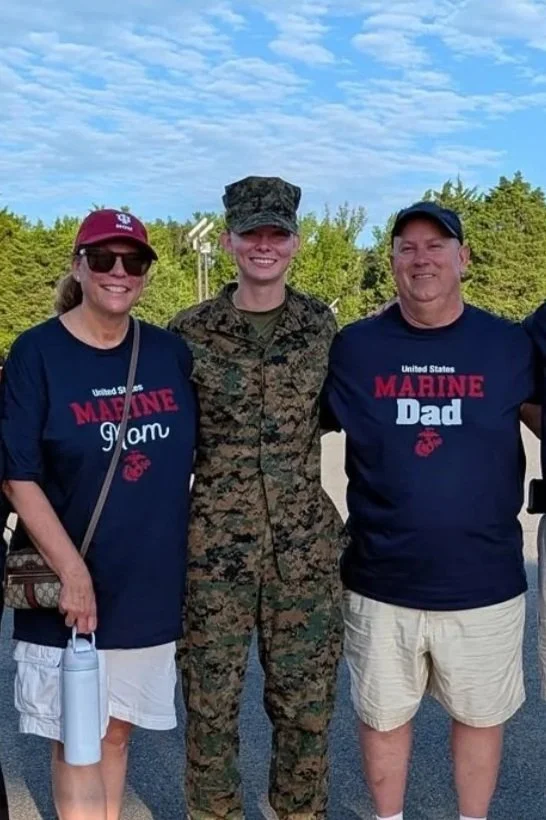
Julia Barber: Burlington, MA
Highest PFT: 282
Leadership Positions: Battalion Commander, Company Commander, Platoon Commander, Training Officer, Drill Officer, and Logistics Chief
This semester, I have the privilege of serving as my unit’s Battalion Commander. At the beginning of the semester, I laid out my intent for the battalion in three parts: know yourself and seek self-improvement; set the example and hold others accountable; and operate as and support each other as a team. These three principles are my statement of what I believe is important for our battalion and what I expect from every midshipman. However, “Do What You Say, Say What You Mean” reminds me that stating those expectations is only half of my responsibility as a leader. If I expect others to follow them, I have to demonstrate them myself.
The first part of my intent, knowing yourself and seeking self-improvement, means recognizing where I can improve and actually doing something about it. This semester, I have continued my research at the Laboratory for Laser Energetics while also joining the rowing team. Both have challenged me in different ways and pushed me to improve academically and physically. I tend to hold myself to a higher standard than I hold others, because I believe that if I am going to ask something of the battalion, I should first be willing to ask it of myself.
The second part, setting the example and holding others accountable, starts with being present. I make an effort to show up to everything, be the first to volunteer when appropriate, and ensure that I always look and act the way I expect a midshipman to. Rank alone does not make someone an example. If I expect others to meet a standard, my own actions need to show that the standard actually matters. Additionally, I have no right to hold other to my standard if I fail to meet my own standard.
Finally, I have emphasized operating as and supporting each other as a team. One of my focuses this semester has been the development and involvement of our freshmen. I primarily accomplish this through the chain of command by working with my Company Commander, but I have also made it a personal goal to meet individually with every 4/C. I want to know who they are, what they hope to accomplish, and what I can do to help them succeed at NROTCU Rochester.
To me, “Do What You Say, Say What You Mean” is about consistency between words and actions. As Battalion Commander, I can tell people what I value, but those words mean very little if my actions contradict them. Leadership means making my expectations clear, then holding myself accountable to those same expectations every day.
“Do What You Say, Say What You Mean” - Will Schuessler
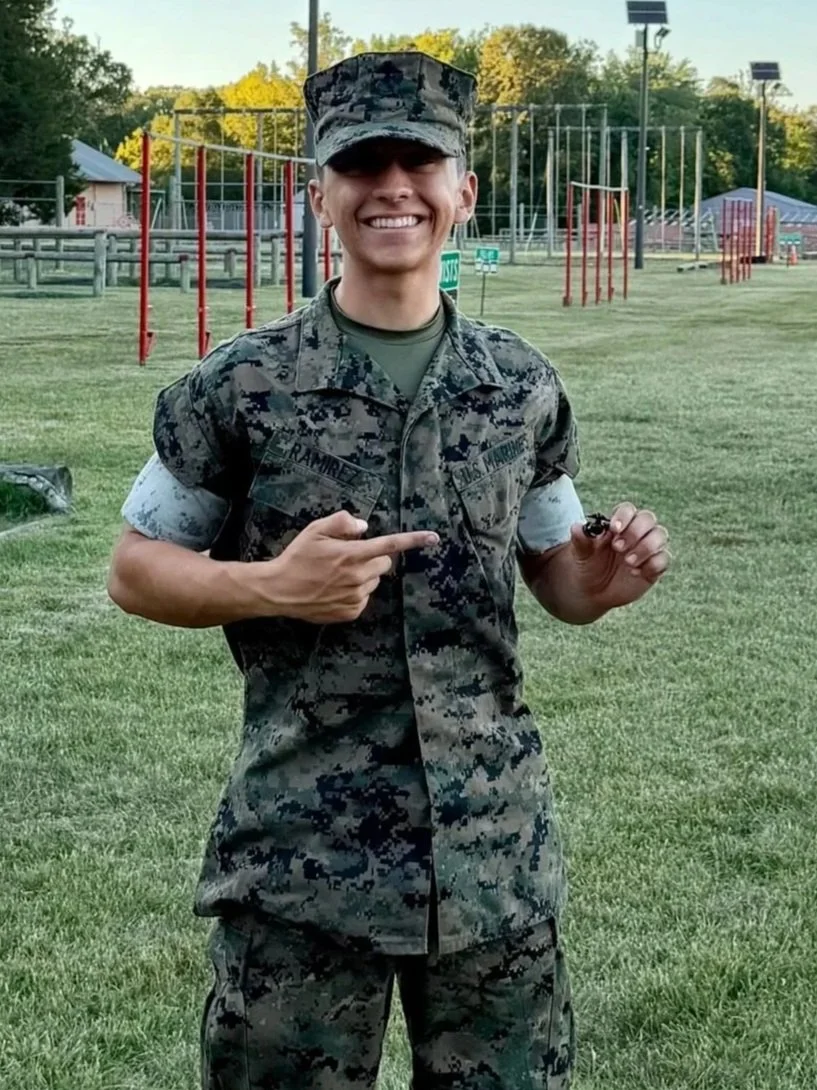
Joshua Ramirez: Miami, FL
Highest PFT: 300
Leadership Positions: Fire Team Leader, Squad Leader, Physical Training Instructor, Platoon Sergeant, and Company Executive Officer
The quote “Do What You Say, Say What You Mean” is something I believe is extremely important in leadership. This quote emphasizes the importance of integrity, accountability, and setting and holding standards. Leaders cannot expect their people to take them seriously if their words do not match their actions. This disconnect burns trust within a group, leading to an ineffective team.
Throughout my time in ROTC, I have learned how quickly expectations can lose meaning when they are not followed up with action. It is so easy to tell others what is expected of them and what they have to do. But all of that means nothing if you cannot do what you are asking of others. As a leader, you should never tell your people to do something if you yourself are not willing to do it. As Company XO, I need to hold myself to the highest standards and set an example for the people who follow my instruction. If I do not “Do What I Say,” why should any of them listen?
I also believe that “Say What You Mean” is very important. I believe it is better to be straightforward with someone rather than tell them what they would like to hear. If the standards are not being met, they should know. Something valuable I have learned is that being direct with someone does not mean being disrespectful. There is a difference between correcting someone out of frustration and correcting someone because you genuinely want to see them improve and grow. I want the people I lead to understand why I am holding them accountable instead of feeling like I am looking for any little reason to criticize them.
I think this quote applies to how I want to be seen as a leader. I do not want to be the person who talks about accountability or standards but then avoids them when they apply to me. If I make a mistake, I must own up to it and learn from it. If I set a standard, I must follow it.
Overall, I believe “Do What You Say, Say What You Mean” ties directly to the leadership trait of dependability. If a leader’s actions do not match their words, how can their people trust them? To achieve a goal as an organization, there must be a solid foundation built on trust. Dependability is not built in one day. It is built through small actions over time. People may eventually forget what I told them, but they will remember whether my words matched my actions. Therefore, "Do What You Say, Say What You Mean.”
“Do What You Say, Say What You Mean” - Will Schuessler
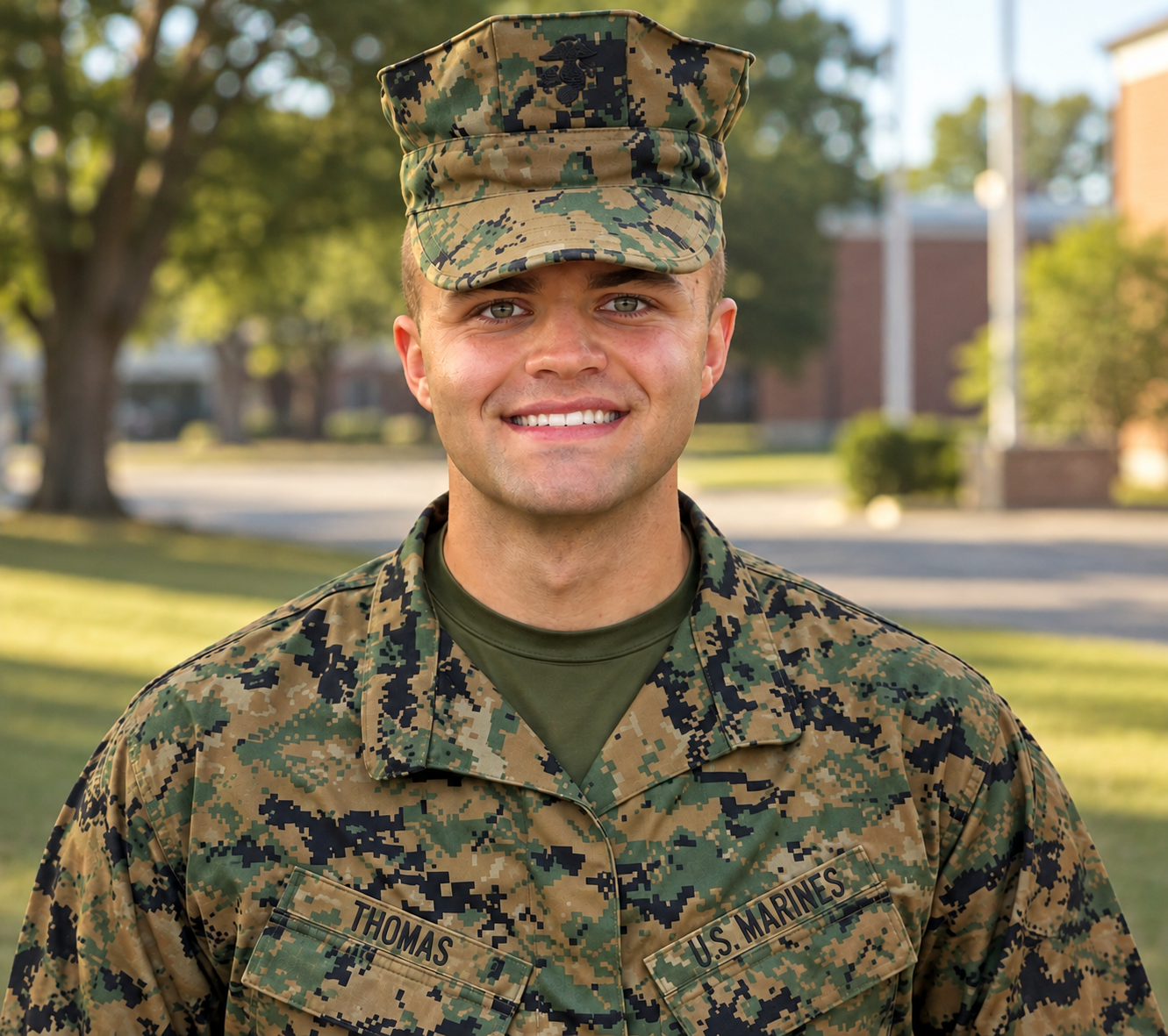
Jacob Thomas: Port Orange, FL
Highest PFT: 300
Leadership Positions: Fireteam Leader, Squad Leader, Platoon Sergeant, Platoon Commander, Naval Ball OIC, Armorer, Midshipman Orientation Squad Leader and Platoon Commander, LDE OIC, MOC XO, Battalion Executive Officer
Growing up in a poor, dysfunctional family presented many challenges. There were days when not having enough food or a roof over our heads created hardships within my family. I quickly learned that I would have to take care of myself and my younger siblings. However, my past doesn’t define my future. Through the trials I faced growing up, I learned to be a leader among my peers, and to take responsibility. The quote “Do what you say, say what you mean” within leadership means that, as a leader, I need to follow through, even when it is difficult. I cannot allow myself to be defined by my past; instead, I must hold myself accountable to become the leader my followers deserve.
When I first met Will Schuessler, he demonstrated what it means to better those you lead. I was struggling to achieve instrument rating for flight training, and he sacrificed his own time to help me study and achieve my goal. This experience taught me that while the quote “Do what you say, say what you mean” is often associated with setting the example as a leader, it also represents the sacrifices leaders must make for those they lead. Your subordinates deserve a leader who continuously strives to better themselves. Will showed me that leadership means sacrificing for others.
Throughout my time in Marine Corps leadership, I had opportunities to lead in capacities that have tested my planning and logistical skills. I put myself in positions that challenged me to take on more tasks than I thought I could handle, expanding my ability to lead. Leadership positions give you that rare opportunity to discover what you are capable of. “Do what you say, say what you mean” also means that I cannot ask those I lead to do something that I would not be willing to do myself. Knowing my own limitations helps me remain accountable for my actions and prevents me from placing unrealistic expectations on those I lead. My experience in the Marine Corps has shown me that this quote represents personal accountability.
Ultimately, “Do what you say, say what you mean” means more to me than simply following through on my promises. My experiences growing up have taught me resilience and responsibility, while my experiences in Marine Corps leadership have taught me the importance of accountability and leading by example. Will taught me that being a leader means being willing to sacrifice to help those you lead become better. I’ve learned not to expect others to meet a standard that I would not meet myself, and that by understanding my own limitations, I can lead with honesty and accountability. These lessons shaped the leader I strive to become: a leader whose words have meaning because my actions consistently support them. As I continue my journey in the Marine Corps, I will carry this quote with me as a reminder that true leadership is built on trust, sacrifice, accountability, and the willingness to do what I say.
“Do What You Say, Say What You Mean” - Will Schuessler
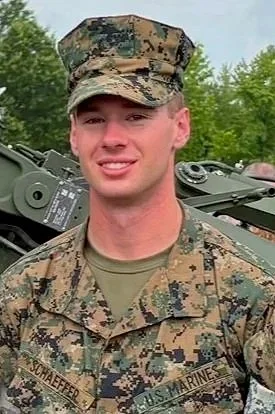
David Schaeffer: Dayton, TN
Highest PFT: 277
Leadership Positions: Marine Option Company XO, Marine Option Company Supply Officer, Marine Option Company Platoon Sergeant, Marine Option Company Platoon Commander
"Leadership is not measured by the position someone holds. It is earned by the ability to gain the trust of those appointed under them. The quote, “Do what you say, say what you mean,” is not simply about accountability; it embodies the definition of the Marine Officer Candidate School motto, “Ductus Exemplo,” or lead by example. Anyone can give an order, but a true leader should understand how much more powerful their actions are than their words.
I had a leader who could put on a facade in front of his people only to lose his credibility when he thought he was behind closed doors. He preached about how gossip and rumors destroy a work environment, but eventually I found out he was the main spreader of them. It made me wonder what he might have said about me in that office. It felt like a betrayal of trust and friendship. From that point on, my goal became to be the type of person others never have to worry about when they are not present.
I also had a team captain who was physically gifted and never had to train to keep his running times low while I was in cross country. He would brag about a time he never had to put extra work into, which demoralized the rest of the team. He told me to run more if I ever wanted to pass him, so I began running during the offseason while he kept his old habits. When we came back for the next school year, he ran the same, but I was ahead of him this time. This was the first time I experienced the true meaning of “do what you say, say what you mean.” His words told me that I needed to work harder, so I did. I learned that improvement does not come from simply telling someone what they need to do, but it comes from being willing to put in the work yourself.
The best leaders I had put themselves through the same things the rest of us were going through. When I first started cheerleading, I had a runner’s build and did not have the strength to keep up with the coach’s expectations. Instead of simply telling me to get stronger, he made time in his schedule specifically to teach me how to work out properly. He showed me that leadership is not about standing above the people you lead but standing beside them and helping them improve.
As a future officer of Marines, I cannot expect them to trust me just because of the rank I wear. I need to hold myself to the same standards I will expect of them. “Do what you say, say what you mean” is a reminder that leadership begins with character. The leaders who had the most impact on me were not the ones who gave great speeches. They were the ones who led from beside me. This is what Will’s quote means to me.
“Do What You Say, Say What You Mean” - Will Schuessler
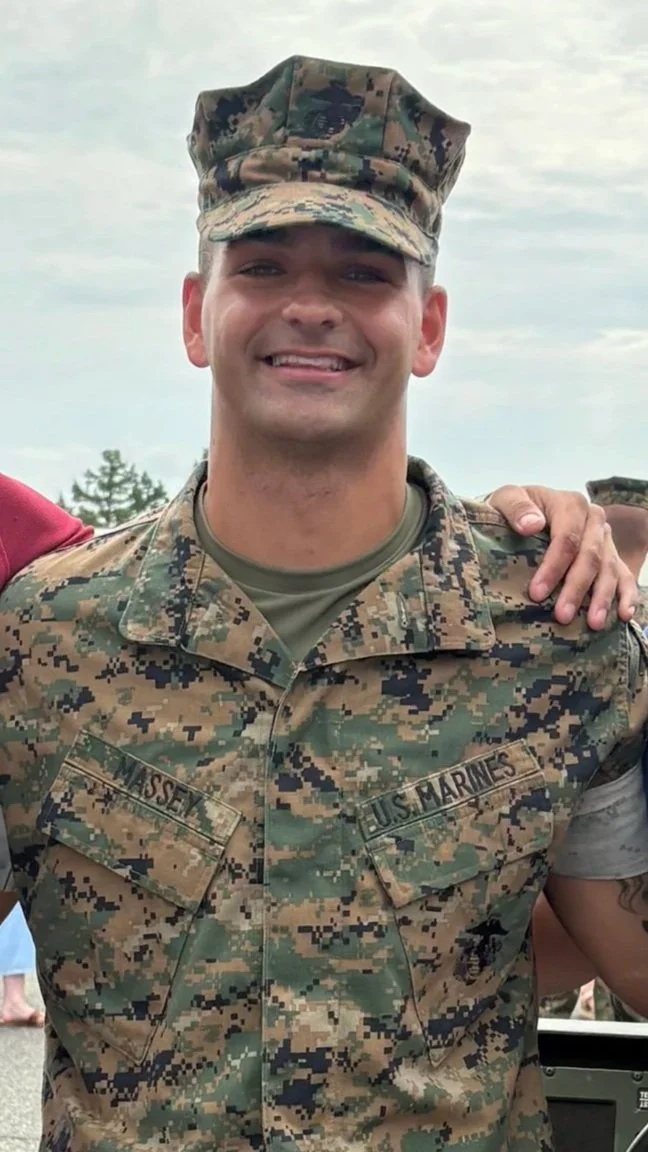
Jesse Massey: Houston, TX
Highest PFT: 290
Leadership Positions: Battalion Sergeant Major, Midshipman Instructor, Platoon Commander, Platoon Sergeant, Squad Leader, Company Armorer, Battalion Academics Officer
"Do what you say, say what you mean" is a standard I try to apply in every leadership position I hold. To me, the first half of the quote is about accountability. If I tell my peers or subordinates that I am going to do something, they should be able to trust that it will get done. The second half is about having the courage to communicate honestly and directly, even when the message may be difficult to deliver.
My recent experience at Officer Candidates School reinforced the importance of this standard. At OCS, words mean very little if they are not followed by action. Everyone is tired, stressed, and under constant evaluation, so people quickly recognize who can be trusted. Early in the training, I focused too much on keeping my head down and handling my own responsibilities. I eventually realized that leadership required more than simply performing well as an individual. I had to become more aware of the people around me. I learned that if I said I would support the team, I had to prove it through my actions, especially when I was exhausted or under pressure.
I carried that lesson into New Student Indoctrination when I showed up after OCS as an instructor. When working with new midshipmen, I understood that they would pay more attention to what I did than what I told them to do. I could not demand discipline, effort, and accountability from them if I did not consistently demonstrate those qualities myself. I also learned to be direct with my feedback. "Say what you mean" does not mean speaking without consideration for others. It means giving people honest guidance and making sure they know that the purpose is to help them improve.
In leadership, trust is built when words and actions remain consistent. I try not to make promises I cannot keep, and once I give my word, I take personal responsibility for following through. I also try to communicate with honesty and confidence while still treating my peers with respect. This quote reminds me that leadership is not defined by what I claim I will do. It is defined by whether the people around me can trust my word and see it reflected in my actions.
“Do What You Say, Say What You Mean” - Will Schuessler
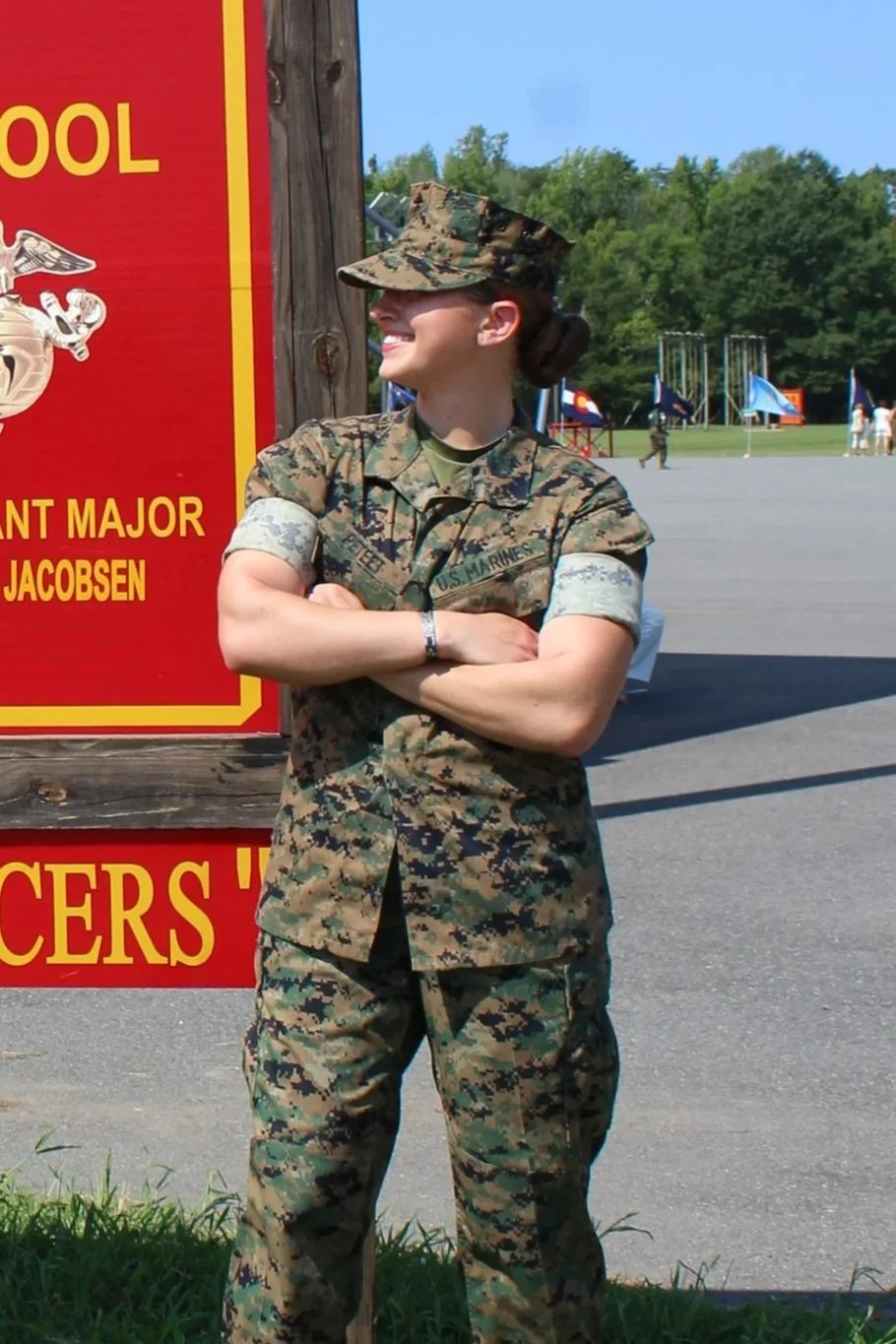
Savannah Peteet: Marshall, TX
Highest PFT: 297
Leadership Positions: Battalion Academics Officer, Battalion Public Affairs Officer, Field Exercise OIC, Social Media OIC
Anyone who has completed OCS has a favorite leadership trait. Mine is integrity. “Do what you say, say what you mean” is the epitome of what integrity looks like. That quote is written on the memorial bracelet that never leaves my person. Throughout OCS, that bracelet stayed tucked in my CamelBak as a reminder of the weight my words and actions hold. I thought of the quote whether I was leading my peers or simply in ranks. To me, it is a daily reminder of how every word I say should be supported by my actions, and the measure of my integrity reflected in that.
Two years ago, as a Navy Option Midshipman, I approached my AMOI, and said, “I want to lead Marines.” Shortly after, I began the process of switching to Marine Option. It was easy to say I wanted to achieve my goal, but harder to do. When I felt lost on a SULE, unprepared to give a 5PO, or simply ready to quit my Wednesday night run early, Will was the first to appear and coach me. It was the first example of leadership in which someone held me to the words I said and pushed me to that commitment when I had doubts. I watched him live out his quote before he even began saying it to others around him. Learning to lead was my greatest obstacle as a Midshipman, and after Will passed away, it became one I was determined to overcome. For me, his quote pushed me not only to become a leader but also to develop confidence and a passion for leadership.
What is your “reason” for serving? I have been asked that question a hundred times as a Midshipman. Even before the day I first put on the MARPAT uniform, I said I wanted to lead Marines. That was my reason. When I think of the quote I wear on my wrist every day, I also think of the promise it is of my integrity to my future Marines. I think of how Will held me to what I said when I told him, “I want to lead Marines,” and it inspires me to hold my Midshipmen and one day Marines to the goals and decisions they pursue. At least once a day, I tell someone how much the uniform means to me, how I believe in leading by example, and how honored I am to be on the path to becoming an officer of Marines. I say these things daily and strive to do what I say.
“Do What You Say, Say What You Mean” - Will Schuessler
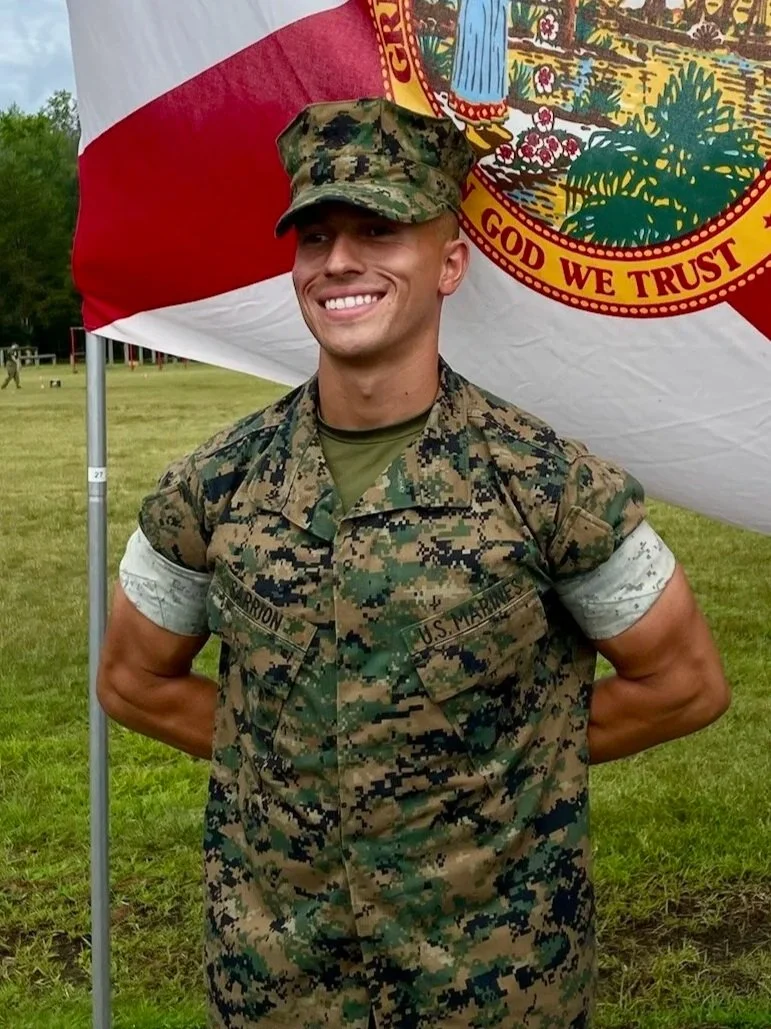
Ashton Sarrion: Miramar, FL
Highest PFT: 300
Leadership Positions: Company 1Sgt, PTI (Physical Training Instructor), Platoon Commander, Platoon Sergeant, Squad Leader, Fire Team Leader
Will’s quote, “Do what you say, say what you mean,” when applied to leadership, means actually doing the things you preach about and speaking in a way that is genuine. Personally, I believe a good leader is someone who would never tell their people to do something they wouldn’t do themselves. At my unit, I always preach about being physically fit, and I do what I say by making sure I’m not only meeting the standard but exceeding it by far. Personally, I’ve never gotten anything but a 300 on the PFT, and while that may seem cocky, I think it is simply a testament to what I always talk about and encourage others to do as well. I see no point in having all the knowledge I have regarding exercise if I don’t share that wealth of knowledge within the Marine Corps and, currently, at my unit.
The drive and discipline I have are a credit to my father, who showed me what a real man is. Regardless of how he feels, he will always provide for our family and give us the best lives possible. When I was at NSI, going into college, I knew my grandmother was fighting for her life. When I left for NSI, I knew that was likely the last time I would ever see her again. I didn’t find out that my grandmother had passed until seven days later, when it came time to check in for flights the night before graduation.
After finding out, I wanted to see how my dad reacted to his mother passing, so I ended up looking at our Ring camera footage from the day she passed away until the day I returned from NSI. What I saw from my dad built upon the strong foundation of discipline I had already gained thanks to my brother and football. Even though my dad was definitely grieving, he still did all the things he always had. He woke up at 8:00 a.m., worked his regular shift as a cop from 9:00 a.m. to 4:00 p.m., went to the gym from 5:00 to 6:00 p.m., took a nap from 7:00 to 10:00 p.m., then worked his overtime shift from 10:30 p.m. to 3:30 a.m. He would sleep from 4:00 to 8:00 a.m. and then repeat it all again.
My dad is also a Marine. He enlisted and became an infantry rifleman (0311). My father is the definition of “Do what you say,” and he inspires me to be the same every single day.
Additionally, in leadership, the part “say what you mean” means being yourself. Be genuine with your people and your Marines. Don’t try to put on an act because people will see right through it. Before becoming a 1/C, I questioned whether or not I should start being more serious because I’m naturally a very goofy person. Especially during OCS, I found that humor was one of the best ways to get through that type of training. Making light of every situation we were in was a way I not only improved my own morale but also the morale of my peers.
Now that I am officially a 1/C, while I am definitely more professional, I’m still not scared to bring out my goofy side. At the end of the day, we’re all going to leave this Earth one day and will only survive through the memories and stories people tell about us. Therefore, why not be yourself unapologetically and “say what you mean?”
“Do What You Say, Say What You Mean” - Will Schuessler

Lennon Spakousky: Daytona Beach, FL
Highest PFT: 300
Leadership Positions: Midshipmen Orientation Company Commander, Marine Option Company(MOC) Commander, MOC PT Operations
Lead by example. Being under Will's leadership and seeing the legacy he made at Embry-Riddle has helped me realize the impact he had on his peers and subordinates. "Do What You Say, Say What You Mean" embodies several leadership traits and the core values of the Marines.
Integrity: To do what you say and live by your own directives. Going back on your word and failing to uphold your own standard shows not only hypocrisy but a lack of integrity, and your junior Marines will learn to ignore your leadership. A good officer leads by example and abides by his own set standard.
Accountability: A leader must be ready to own his successes and failures. If you want your Marines to own their mistakes, you must also take accountability. To say what you mean, you must speak honestly about what you expect. When Marines know that your words have weight, they will trust your decisions. A good officer is dependable.
Judgement: Judgement means you understand what you are saying and the consequences of your words. An officer must think carefully before action, because poor judgment can create confusion and hurt one's dependability as a good leader. Good judgment means looking at the situation, observing, orienting, deciding, and acting. An officer who practices good judgment can mean the difference between mission failure or success. Say what you mean asks you to embody judgment. When you speak, your words carry weight.
As a now Marine 1/C at ERAU, I have started to understand how meaningful "Do What You Say, Say What You Mean" has become for myself and our battalion. I strive to embody the qualities that come with this phrase but am the first to admit that I often fail. Officer-ship means continuous improvement and constantly raising standards.
As an officer, I will set the standard as a Marine and leader; I will strive to always keep my own standards. The culture Will left behind in his peers shaped me, I can only hope to shape my midshipmen into Marines who embody the phrase "Do What You Say, Say What You Mean."
“Do What You Say, Say What You Mean” - Will Schuessler

Dominick Gomez: Frederick, MD
Highest PFT: 294
Leadership Positions: Platoon Sergeant, Squad Leader
"Do What You Say, Say What You Mean" is a phrase that has stayed with me because of the person who taught it to me. Will Schuessler was a close friend of mine, a Marine, and someone I looked up to. Will was one of the people who encouraged me to join the Marine Corps. During an hour-long conversation with Will on the beach, we talked about the Marine Corps, leadership, and what it meant to commit yourself to something greater than yourself. At the time, I did not realize how much that conversation would influence the direction of my life. I took his words seriously and eventually made the decision to pursue the Marine Corps myself. Looking back, that conversation is one of the reasons this quote carries so much meaning for me. It taught me that words only have meaning when you are willing to stand behind them with your actions.
I apply "Do What You Say" by following through on commitments I make and holding myself to the standards I set. I take my responsibilities seriously and do not want my words to be empty. I put the same effort into my responsibilities that I expect from others and lead from the front rather than asking people to do work I am unwilling to do myself. My word is a commitment, and I take that commitment seriously. I ask myself every day, "Am I upholding the commitments I have made, and do my actions reflect the words I have given?" Following through builds trust, and trust is essential to the way I lead.
I apply "Say What You Mean" through the way I communicate with others. I believe in being honest and direct, even when what needs to be said is difficult or uncomfortable. Will was always honest with me, sometimes brutally honest, but his words mattered because he was trying to make me better. I carry that into my own leadership by being straightforward and making sure my words have purpose. I recognize people for their accomplishments, encourage them when they are struggling, and address problems rather than avoiding them. I want the people around me to trust me and be able to depend on me.
Will made a commitment to me that helped bring me to where I am today, and I will always be grateful to him and his family for that. I carry the memories and lessons from our friendship with me, and they have shaped the way I view leadership. As a Marine officer, I give my Marines and peers the same commitment that he gave me. I want them to know that they can rely on me, trust what I say, and know that I will stand behind my words with my actions.
To me, "Do What You Say, Say What You Mean" is more than a phrase. It is a standard I personally apply through my actions, commitments, and the way I communicate. Will gave me the words, but only I can put them into practice. I will carry that standard with me throughout my life and into the Marines I have the privilege to lead.
“Do What You Say, Say What You Mean” - Will Schuessler
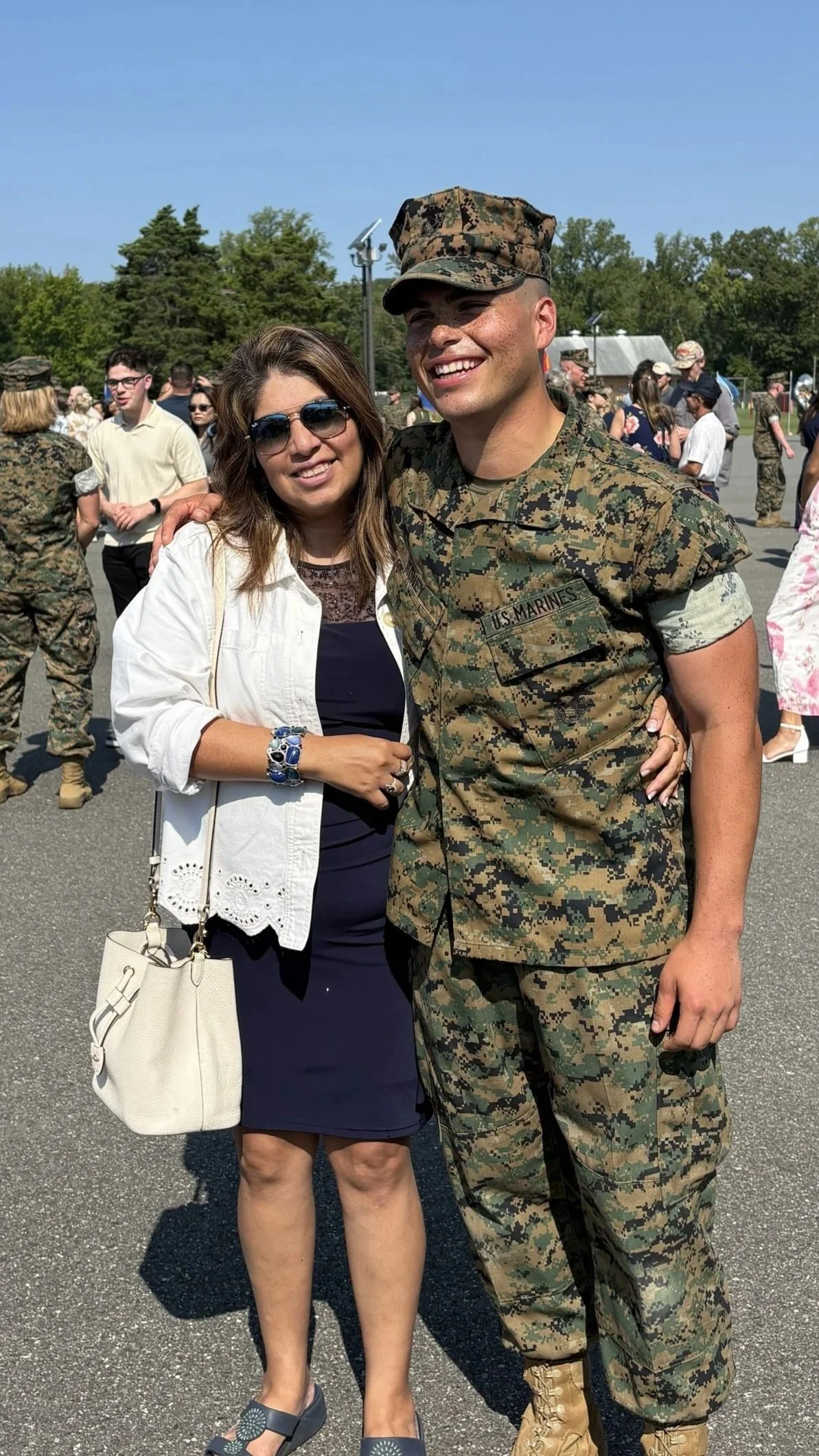
Steven Roney: Chesapeake, VA
Highest PFT: 295
Leadership Positions: Plt Sgt., Plt Cdr. Company Co, SFS president (Marine Option training Operations Officer)
When I envision my last days on this beautiful earth, I often see myself as an old, wrinkled, white haired, bearded man; surrounded by family as I take my last breath. For many people, this is the perfect way to say goodbye. No suffering, surrounded by love, and a body aged full of memories and laughter. The reality is…life can be unfair. We can never guarantee our ending. How, when, or why? No matter how hard we may try, time always gets a vote. There is really only one way to solve this seemingly unfair, unjust, heart shattering truth…and that is acceptance. Accept the fact our time is never a guarantee. Once we accept our terms then we can move forward in this game of life. So how do we play? How do we win? In my opinion, to win you must find your full potential with the time you have. Embrace every moment to the fullest. Leave nothing on the table for “what if".
The pain of regret is significantly more than the temporary pain of achieving what you avoid most. What we want to accomplish in life can feel terrifying. We fear failure and we crave comfort. So, the saying “Do what you say, say what you mean” carries the answer to our problem. In the past year, I had to live up to this very statement. Enrolling in NROTC as a scholarship recipient in the Fall of 2022, I was blessed in a tremendous amount of ways. The lessons learned, people met, and challenges faced all brought me here. However, as a Navy option my heart always yearned for the Marine Corps. I contemplated switching but with the fear of not getting accepted, embarrassment of my GPA, and the thought of “am I quitting” or “what would my parents think” I took the comfort of avoidance.
It wasn’t until I truly realized with the passing of my dear friend, Will Schuessler, our time is of the essence. I found comfort in knowing Will accomplished so much in such little timing. He left nothing on the table, and he seemingly won this game of life. Unknowingly, his loss brought me a new sense of purpose. I would go on to submit a “Blue to Green” package, not once but twice. I wanted to live my life to the fullest, the way Will did. I knew I would rather live with not being accepted than not trying at all. When you do what you say, and say what you mean; you find the unselfish desire to live and serve for the other. This saying is the very reason I now write as an official United States Marine. For the young officers and leaders, we owe it to our enlisted men. Live everyday like it’s your last. Find your true potential, leave nothing on the table and as Will said best…“Do what you say, say what you mean”.
“Do What You Say, Say What You Mean” - Will Schuessler
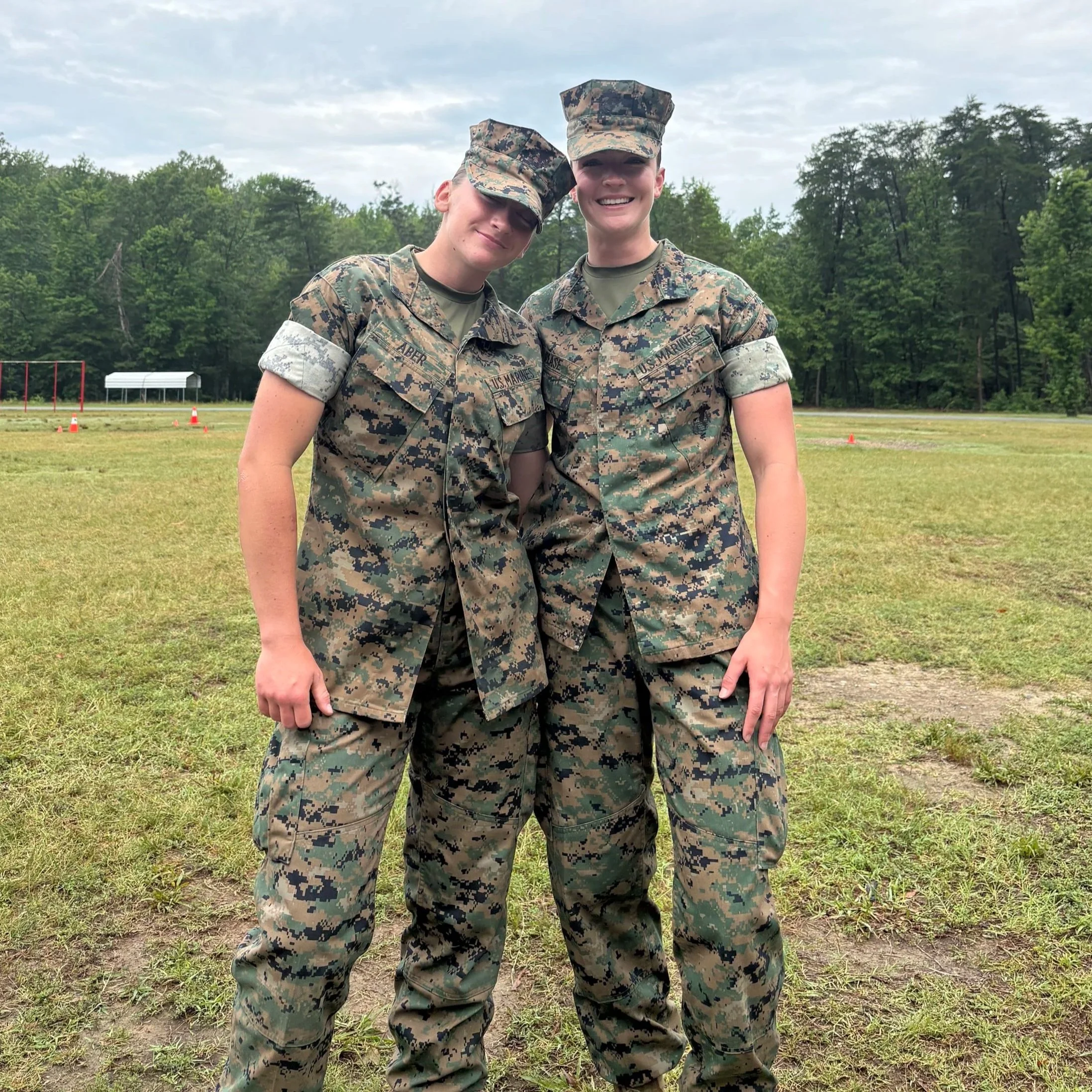
Emma Aber: Jacksonville, FL
Highest PFT: 300
Leadership Positions: Plt Sgt., Plt Cdr. Company Co, SFS president (Marine Option training Operations Officer)
When I see the quote "Do what you say, say what you mean," I think it has everything to do with having values and carrying yourself in accordance with them in everything you do. Many people can walk through life without holding themselves to any sort of moral standard and yet still judge others. To me, doing what you say is living the example you set, showing others and making those values clear. An easy example for any Marine is PT. As future Marine Corps officers, PT is ingrained into our path as a foundation for the rest of our future. We will soon need to hold our own Marines to the Marine Corps PT standards; to do that, we ourselves shouldn’t just be meeting the standards; we should be exceeding them. It’s another way of saying practice what you preach. Anything but that is not only hypocritical, but it’s not a respectable way to carry oneself.
A key leadership principle of the Marine Corps is to lead by example. Don’t expect of others what you can’t or won’t do yourself. Though it may not be an easy thing to do, I believe it is 100% necessary in our line of work not only to garner respect from others but to have respect for ourselves. Being consistent in what you practice yourself and what you expect of others is one of the most important traits we can pull from this saying as well. If I’m all talk and putting on a show in front of people but then I don’t put in the work behind the scenes on my own time, that’s no way to lead others. Being genuine, being consistent and setting the example you want to see is how you "Do What You Say and Say What You Mean."
“Do What You Say, Say What You Mean” - Will Schuessler
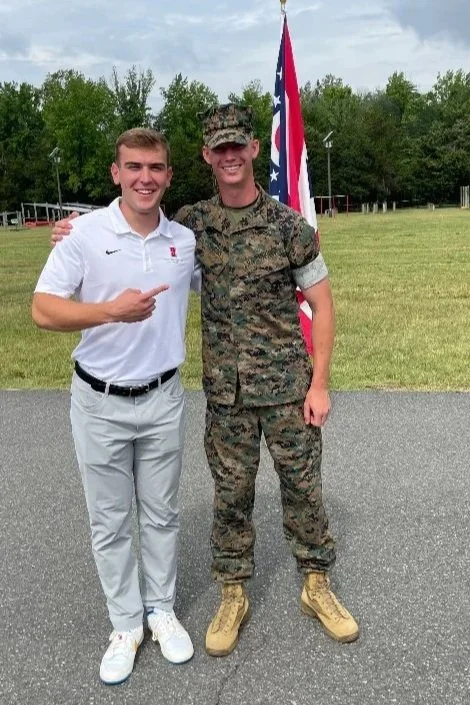
Nicholas Harris: Morrow, Ohio
Highest PFT: 295
Leadership Positions: Squad Leader, Co. Gysgt, Battalion SgtMaj.
“Do what you say, say what you mean” is a very simple but effective principle for leadership. As a leader your every move is seen by your subordinates just as your words carry a lot of weight. People who you expect to follow you will very quickly be able to tell if you can be trusted by their own observation. MIDN Schuessler's quote means following through on your commitments and being honest in your communication. These are both important traits for leaders.
“Do what you say” speaks about accountability. When leading others you need to be accountable for yourself. One example of this was when I was leading my battalion and the battalion SgtMaj. Part of my role was to ensure that the unit operated with good order and discipline along with making sure everyone had squared away uniforms. This meant that I had to make sure I was on top of everything before correcting others. Had I not been within the standards that I was enforcing I would have been seen as a hypocrite. This would destroy my reputation and make me a less effective leader.
“Say what you mean” is about clear and honest communication. Leaders should avoid making statements simply because they are what people want to hear. Instead, they should communicate their expectations, concerns, and decisions honestly. One example of this comes from Officer Candidates School. OCS is a very high stress environment which makes clear communication important. While preparing for a graded hike I was in the role of a squad leader. I had to communicate the packing list and expectations for how to set up the main pack to my squad in a clear and concise manner. Had my communication not been clear my squad would have had their gear messed up for the hike. The Sgt instructors would have then messed us up.
Ultimately, “do what you say, say what you mean” states that leadership is demonstrated through both words and actions. A leader who communicates honestly and consistently follows through on their commitments earns credibility, builds trust, and sets a positive example for others. Good leadership is not just about telling people what to do; it is about demonstrating through your own actions the standards you expect from your team..
“Do What You Say, Say What You Mean” - Will Schuessler
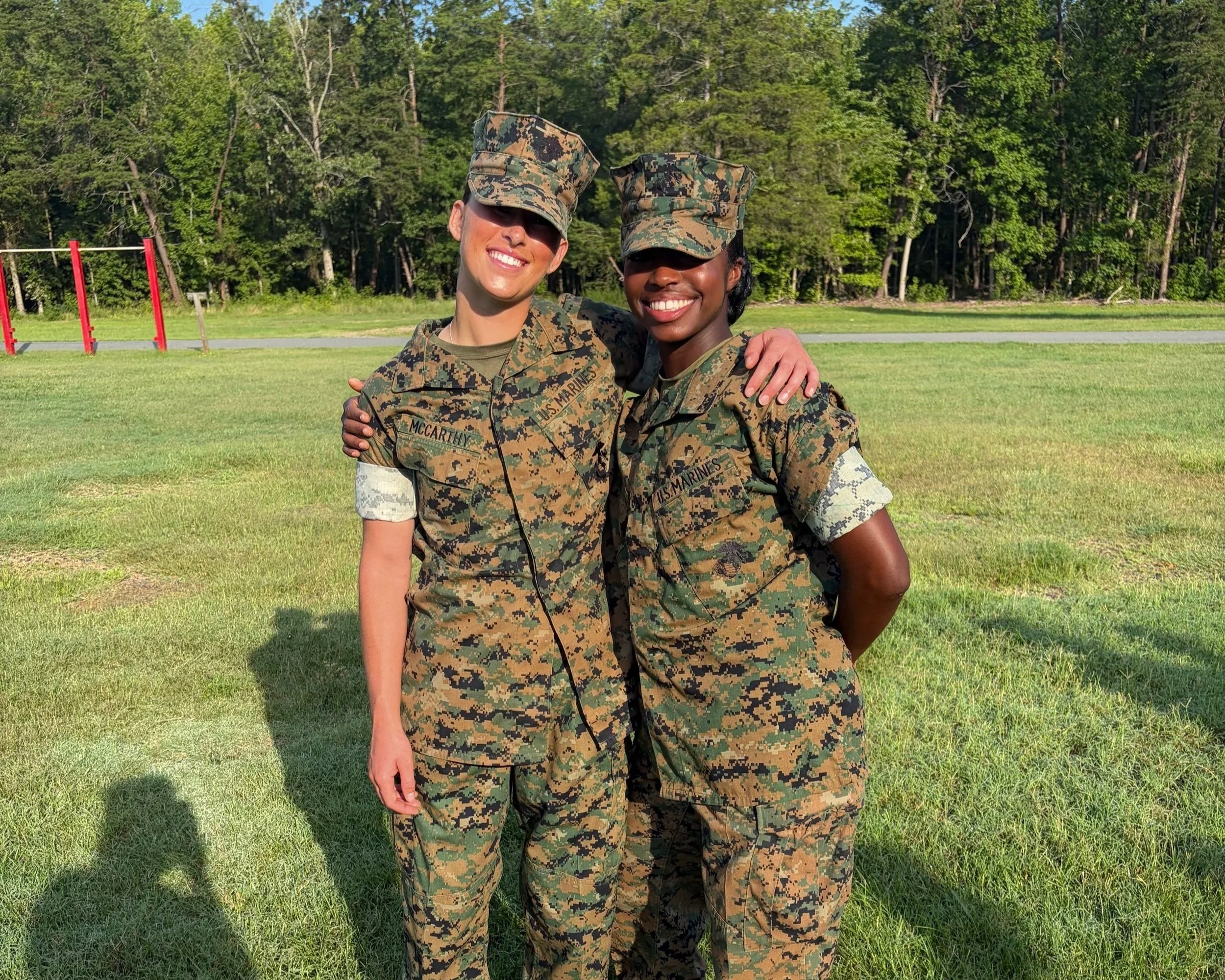
Michaela Menka:Sugar Land, TX
Highest PFT: 292
Leadership Positions: Squad Leader, Midshipman Watch Officer, Physical Training Officer, Administrative Officer, Operations Officer
I interpret this quote similarly to the biblical principle in Matthew 5:37, which says, “Let your yes be yes, and your no be no.” To me, this means that my words should have meaning behind them. If I say I am going to do something, I should follow through. If I make a commitment, I should be willing to uphold it even when it becomes inconvenient or puts me at a disadvantage. I believe this is especially important in leadership because people should be able to trust my word without having to question whether I will follow through.
Personally, I apply this by holding myself to a high standard of accountability. I cannot expect the people I lead to meet expectations if I am unwilling to meet those same expectations myself. As a 1/C, I do not assign tasks to underclassmen that I would not be willing to do myself. Just because I may hold a higher position or have more experience does not mean I should be above certain responsibilities. I also try to lead by example physically. If I expect underclassmen to improve their physical fitness, I need to demonstrate that same commitment by continuously working to better myself during PT. I want them to have a clear example of what right looks like rather than simply hearing me tell them what they should be doing.
However, I also recognize that I am not a perfect leader. There have been times when I have fallen short of the standards I set for myself or have not followed through the way I expected others to. I believe part of accountability is recognizing those moments, admitting when I am wrong, and taking responsibility without making excuses. Leadership does not mean pretending to have everything figured out. It means being willing to correct yourself and do better. I would rather be known as someone who consistently follows through than someone who makes promises they cannot keep.
“Do What You Say, Say What You Mean” - Will Schuessler
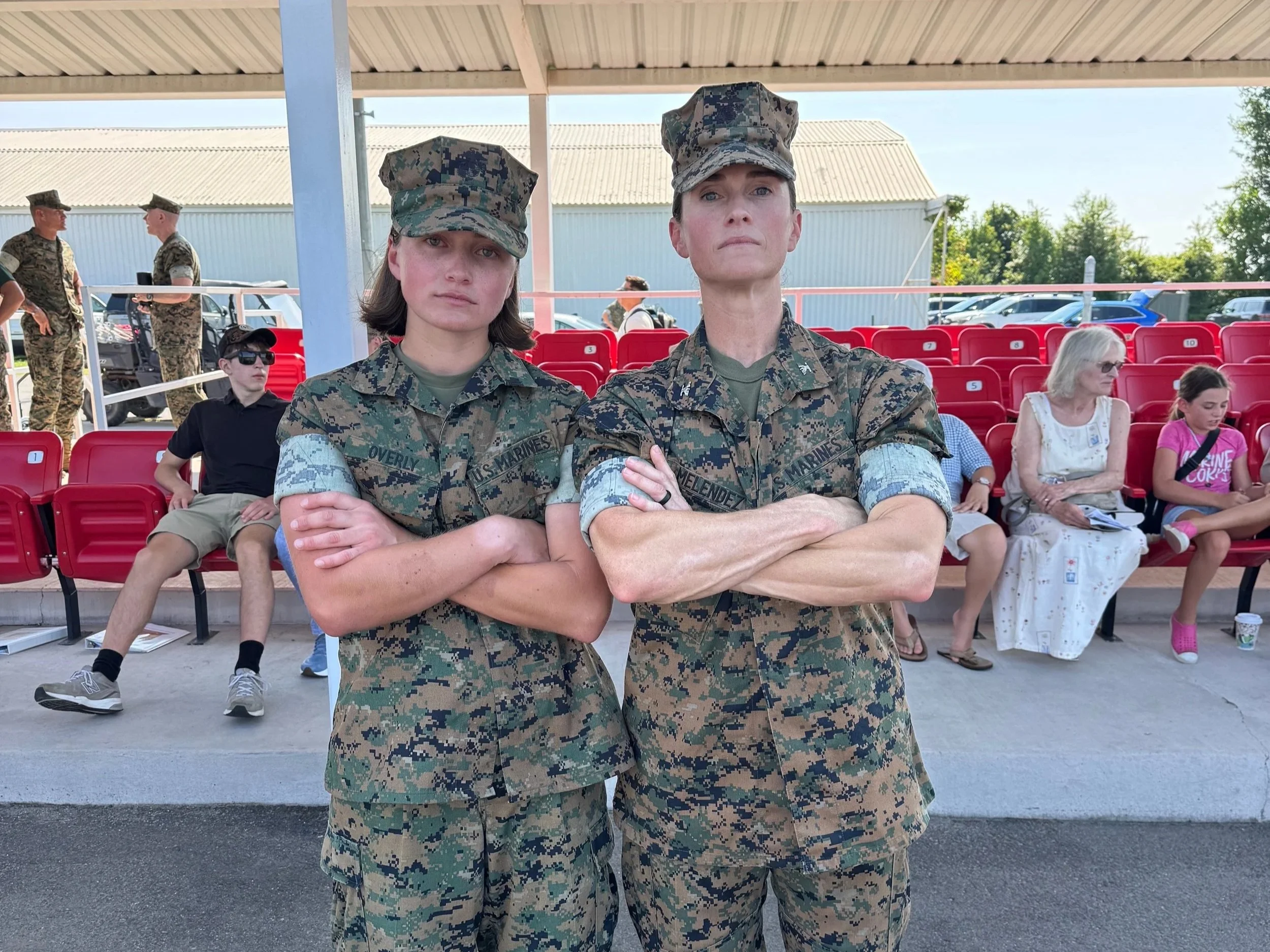
Sarah Overly: Newark, OH
Highest PFT: 300
Leadership Positions: Operations Officer, Physical Training Officer, Midshipman Watch Officer, Supply Officer, Squad Leader
Marines lead from the front. This is what I was told in my very first ROTC lab during my freshman year. In the moment, it was said to motivate us as young Marine Option midshipmen to sit up front and be the first to answer and ask questions. What initially seemed like simple motivation became the cornerstone of my leadership philosophy. Leading from the front is not just about being the first to act; it is about ensuring your actions uphold the principles you claim to believe in.
For me, “Do what you say, say what you mean” represents the responsibility that comes with earning others’ trust. Words mean nothing unless they are reinforced by your actions and character. To demand discipline, I must be disciplined. To demand fitness or integrity, I must be fit and honest. Everyone knows that character isn't defined by what you do when surrounded by others, but by what you do when nobody else is around.
During my OCS cycle, my platoon sergeant told us that there are always three things you can't be stripped of: your name, your faith, and your word. Your word will always follow you, which is why it is so important to keep it. If I make a promise to a Marine and break it, it's not just that Marine's trust I've broken. My reputation would also be tarnished, and that reputation will follow me for the rest of my career. Trust takes time to earn, but it can be lost in an instant. As a leader, I want my Marines to know that when I give them my word, I mean it.
While leadership can be given through authority, I have found it much more meaningful when it is earned through accountability. Leading from the front doesn't mean being the loudest, the strongest, or the smartest. It requires the humility to recognize when you're wrong or when you've made a mistake. It requires the courage to make the hard choices. And it requires the fortitude to hold yourself to the same standards you expect of others, if not higher ones. I believe that if I am unwilling to meet those standards myself, I have no right to demand them from those I lead.
Being a leader is about being consistent between your words and actions. Trust cannot be demanded through rank or superiority; it is earned through example, integrity, and sacrifice. My first lab taught me to sit in the front. My experiences since have taught me that the real test is becoming a leader who deserves to stand at the front.
“Do What You Say, Say What You Mean” - Will Schuessler
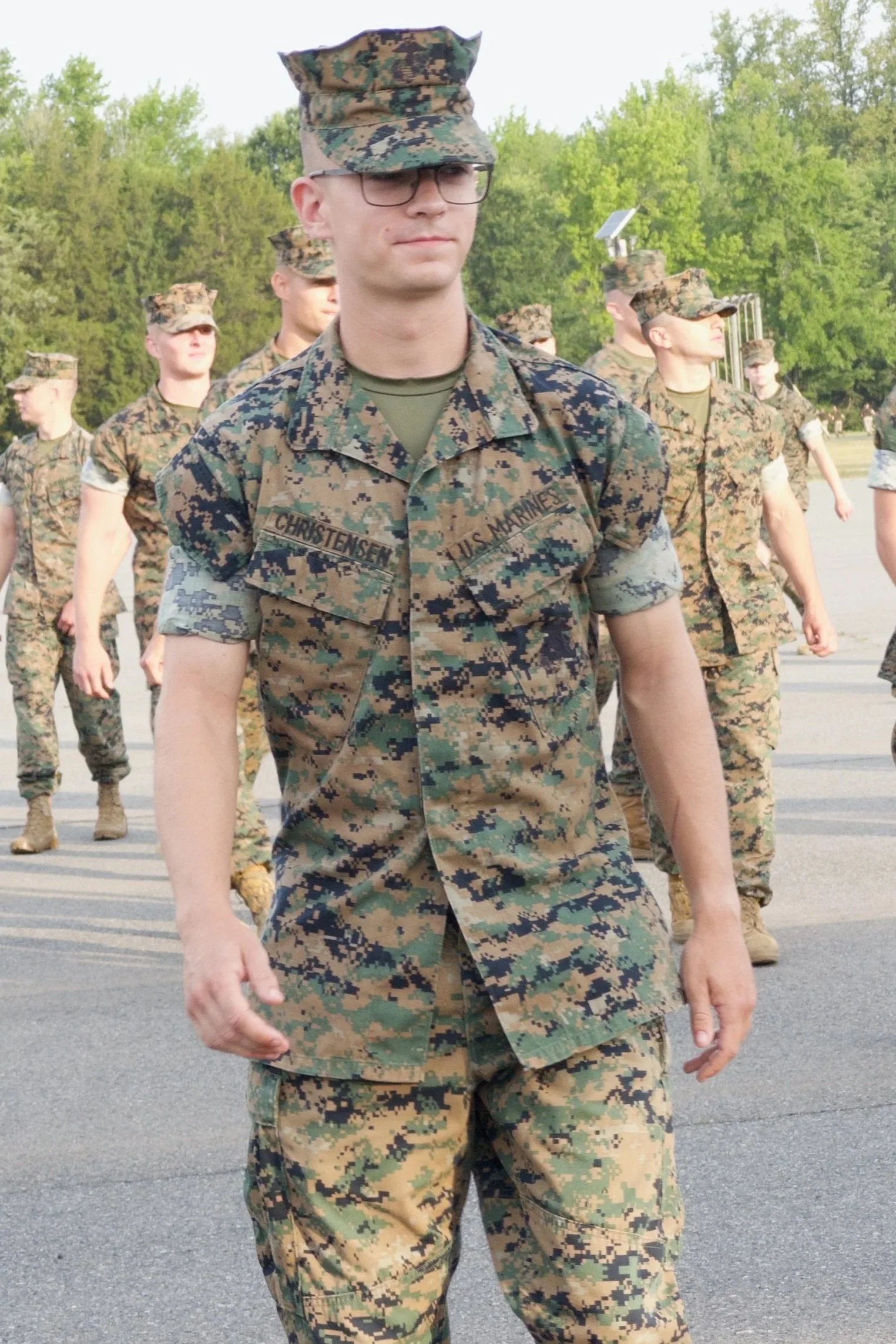
Luke Christensen: Olympia, WA
Highest PFT: 300
Leadership Positions: Operations Officer, Physical Training Officer, Midshipman Watch Officer, Supply Officer, Squad Leader
Marines lead from the front. This is what I was told in my very first ROTC lab during my freshman year. In the moment, it was said to motivate us as young Marine Option midshipmen to sit up front and be the first to answer and ask questions. What initially seemed like simple motivation became the cornerstone of my leadership philosophy. Leading from the front is not just about being the first to act; it is about ensuring your actions uphold the principles you claim to believe in.
For me, “Do what you say, say what you mean” represents the responsibility that comes with earning others’ trust. Words mean nothing unless they are reinforced by your actions and character. To demand discipline, I must be disciplined. To demand fitness or integrity, I must be fit and honest. Everyone knows that character isn't defined by what you do when surrounded by others, but by what you do when nobody else is around.
During my OCS cycle, my platoon sergeant told us that there are always three things you can't be stripped of: your name, your faith, and your word. Your word will always follow you, which is why it is so important to keep it. If I make a promise to a Marine and break it, it's not just that Marine's trust I've broken. My reputation would also be tarnished, and that reputation will follow me for the rest of my career. Trust takes time to earn, but it can be lost in an instant. As a leader, I want my Marines to know that when I give them my word, I mean it.
While leadership can be given through authority, I have found it much more meaningful when it is earned through accountability. Leading from the front doesn't mean being the loudest, the strongest, or the smartest. It requires the humility to recognize when you're wrong or when you've made a mistake. It requires the courage to make the hard choices. And it requires the fortitude to hold yourself to the same standards you expect of others, if not higher ones. I believe that if I am unwilling to meet those standards myself, I have no right to demand them from those I lead.
Being a leader is about being consistent between your words and actions. Trust cannot be demanded through rank or superiority; it is earned through example, integrity, and sacrifice. My first lab taught me to sit in the front. My experiences since have taught me that the real test is becoming a leader who deserves to stand at the front.
“Do What You Say, Say What You Mean” - Will Schuessler
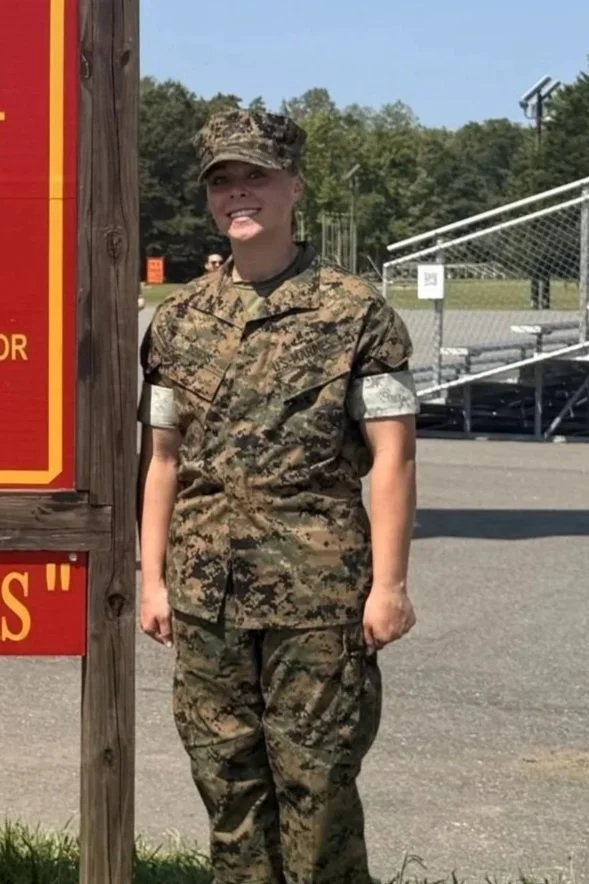
Mackenzie Downs: Fairport, NY
Highest PFT: 264
Leadership Positions: Platoon Commander, Company Executive Officer, Company Commander, COMMRO (Communications Officer), BNXO (Battalion Executive Officer)
Ultimately, maintaining consistency between your words and actions are essential qualities of effective leadership. I apply the quote, “Do what you say, say what you mean,” to my leadership in two key ways. First, I ensure that I clearly communicate my expectations and consistently follow through with them. As a leader, if I establish standards but then fail to uphold or enforce them, my credibility can be diminished and what I say might not be taken seriously. By demonstrating consistency between my words and my actions, I build trust and accountability within my team and people will be more likely to strive to achieve my expectations, if they see their leader holding the standard. I make sure to hold my peers accountable for their actions, even when it may be difficult. Another way I apply this quote is by not expecting others to do something that I am unwilling or unable to do myself. Effective leadership requires leading from the front and setting the example for others to follow. For instance, if I expect my team to achieve a demanding standard, such as completing a 21 minute 3 mile, then I should be able to meet or exceed that same standard. As a leader, when you consistently model the behavior and performance you expect from others, it puts you in a stronger position to motivate, inspire, and teach others to succeed those goals. The principle, “Do what you say, say what you mean,” builds trust, shows your integrity, and proves your credibility as a leader. My first real leadership experiences began as being the team captain of sports teams where nobody would carry equipment to and from practices. When I asked others to carry equipment down to the field I made sure I was carrying equipment every time, to demonstrate that I wasn’t just asking others and not upholding that standard myself. My leadership has grown into leading people in my ROTC unit and helping underclassmen learn and move closer to earning a commission in the United States Navy and Marine Corps. This semester, my Midshipmen billet is the Battalion Executive Officer. The Battalion Executive Officer is in charge of carrying out the Battalion Commanders orders and holding Midshipmen that do not uphold the standards accountable. I have to make sure that when I set the standard I hold that standard, because my words have meaning to all the Midshipmen. Effective leadership is shown by earning the confidence of those you lead and showing that your words can be relied upon. At its core, this quote reinforces the idea of leading from the front. By holding yourself to the same standards you set for your team and consistently following through on your commitments and your word, you will establish yourself as a more trustworthy and respectable leader that people have confidence in.